|
By
August 15, 1914 the Panama Canal was officially opened by the
passing of the SS Ancon. At the time, no single effort in
American history had exacted such a price in dollars or in human
life. The American expenditures from 1904 to 1914 totaled
$352,000,000, far more than the cost of anything built by the
United States Government up to that time. Together the French
and American expenditures totaled $639,000,000. It took 34 years
from the initial effort in 1880 to actually open the Canal in
1914. It is estimated that over 80,000 persons took part in the
construction and that over 30,000 lives were lost in both French
and American efforts.
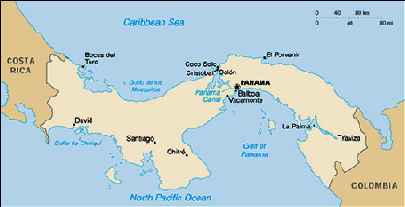
Despite its small population and area (3.06 million and 30,193
square miles respectively), Panama is an important center for
international trade in the Western Hemisphere, as both a major
shipping thoroughfare and a regional economic power. Since
1992, an average of 185 million long tons of cargo has passed
annually through the Panama Canal. Panama is also a financial
and communications hub that sits at the crossroads of five
international fiber-optic networks and hosts 110 international
banks.
The
Panamanian economy is one of Latin America's most stable, with
the Panamanian Balboa being fixed to the dollar since 1903.
Panama's Colon Free Trade Zone (CFZ), established in 1953, is
the largest in the Western Hemisphere and contributes
substantially to the country’s economy. The CFZ allows all
goods, except firearms and petroleum products, to be imported,
stored, modified, repacked, and re-exported without being
subject to any customs regulations. Although the country has
consistently maintained one of Central America's highest per
capita gross domestic product, approximately 37.3% of its
population lives in poverty, including nearly 18.8% in extreme
conditions, according to government statistics.
The
strategic importance of the Panama Canal, shipping and port
services not only makes Panama's economy highly dependent on
world trade trends, but also vulnerable to fluctuations in the
global economy. The recent global downturn brought the growth
rate of Panama's economy, which enjoyed an annual average real
domestic product growth (GDP) of 5.1% through the 1990s,
essentially to a halt. In 2002, canal transits and tonnage, for
example, declined 2.3% and 2.8% respectively, over 2001. Imports
and re-exports activity at the Colon Free Trade Zone decreased,
along with export tonnage of some Panama's major export
commodities, for example, bananas (-5.2%) and shrimp (-16.5%).
Overall, Panama's real GDP growth fell from 2.5% in 2000 to only
0.3% in 2001 and about 0.8% in 2002. Nonetheless, with the
prospects of the global economy improving, Panama’s economy
will most likely recover. The economy is expected to grow 2.3%
in 2003.
On
May 2, 1999, Mrs. Mireya Moscoso was elected to a five-year term
as president. Since entering office, the Moscoso administration
has been trying to reduce the country’s public debt while
alleviating poverty by funding social projects. However, fiscal
restraints, namely the Fiscal Responsibility Law which
stipulates that the public-sector debt cannot exceed 2% of GDP
in a given year, may make it difficult for the government to
implement these programs in their entirety. Along with a
sluggish economy, Panama’s unemployment remains high, at an
estimated 13.2% in 2002. With President Moscoso reaching
the end of her term, much of the government’s attention will
focus on the upcoming national elections, which will be held in
May 2004.

THE
PANAMA CANAL SOCIETY
"To Preserve
American Ideals and Canal Zone Friendships"
The
Panama Canal Society, Inc.
A Not-For-Profit Organization
7985 113th Street, Suite 334,
Seminole, Florida 33772-4787
Tel. (727) 391-4359
Fax. (727)-319-8593
Office Hours: 9:00 - 12:00, 1:00-4:00
Monday thru Friday
Toll Free 1-866-726-2262 About
the Society
DEDICATION
The
Panama Canal Society is dedicated to their thousands of members
who have banded together, starting in 1932, to remember the
great days of working on the Panama Canal and living, and
learning in the Canal Zone and the Republic of Panama.
Since
the beginning of construction of the Canal in 1904, tens of
thousands of Americans dedicated themselves to building,
operating, and defending the Panama Canal as well as providing
the government, hospitals, schools and services required to
support that population. The Panama Canal ceased to be an
American Enterprise on December 31, 1999, ending a long and
proud history of service to world commerce.
To
the people and the partnership of Americans, Panamanians and
citizens from many other nations made this enterprise a success
their website is dedicated to:-
Panama holds negligible hydrocarbon energy reserves, and
therefore imports are the source of most of its energy
consumption. All of the country’s oil and
coal is imported.
In May 2002, the Panamanian government signed an agreement to
cease operations of the country's only refinery, Refineria
Panama (owned by U.S.-ChevronTexaco). ChevronTexaco reportedly
planned to convert the refinery into a fuel import, storage
and distribution center.
THE
PANAMA CANAL
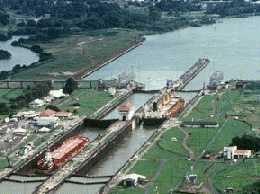
The Panama Canal extends approximately 50 miles from Panama City
on the Pacific Ocean to Colón on the Caribbean Sea. It is
widely considered to be one of the world's great engineering
achievements. The United States is the largest user of the Canal
in terms of cargo tonnage, as either port of origin or
destination, although Asian countries are beginning to close the
gap. Ships bound for Japan from the East Coast of the United
States save about 3,000 miles by going through the Canal; ships
sailing from Ecuador to Europe save about 5,000 miles.
TREATIES
In 1903, the Republic of Panama and the United States signed the
original Panama Canal Treaty, which allowed the United States to
build and operate a canal connecting the Pacific Ocean with the
Caribbean Sea through the Isthmus of Panama. The Treaty granted
the United States the use, occupation, and control of a Canal
Zone, approximately 10 miles wide, in which the United States
possessed full sovereign rights. In return, the United States
guaranteed the independence of Panama and paid the government of
Panama $10 million, as well as an annuity of $250,000, which
each year increased at a rate far beyond that of inflation.
On
September 7, 1977, a new Panama Canal Treaty was signed by
President Torrijos of Panama and President Carter of the United
States that transferred full control of the Canal to Panama on
December 31, 1999. Under this Treaty, the Panama Canal Company,
the Canal Zone, and its government were disenfranchised on
October 1, 1979, and replaced by the Panama Canal Commission
that operated the Canal during the 20-year transition period
that began with the Treaty. The Panama Canal Commission has now
been replaced by a new Panamanian entity, the Panama Canal
Authority. The treaty guarantees permanent neutrality of the
Canal. Control over U.S. military facilities in the former
Panama Canal Zone has reverted to Panamanian authority. The U.S.
Southern Command and U.S. Army South troops moved out of Panama
at the end of 1999. The Panama Ports Company, a subsidiary of
Hong Kong-based Hutchison-Whampoa, now operates the ports at
both entrances, Cristobal (Atlantic) and Balbao (Pacific) on to
the Canal. This has been a cause for security concerns among
some lawmakers in the United States, although the United States
is legally entitled to intervene to maintain the neutrality of
the Canal.
CANAL TRAFFIC
The U.S. East Coast-Asia route is the dominant trade route for
the Panama Canal, and is boosted by increasing U.S.-China trade.
Movement between U.S. East Coast and West Coast South America
and between Europe and Asia are also major trade routes.
Recently, North-South trade has been increasing, as Latin
America evolves into an increasingly important trading partner
of North America. The Canal is designed to accommodate about 50
ships per day (the maximum has been 65 transits per day). On
average, it takes one ship 24 hours to pass completely through
the canal. Oceangoing vessel transits totaled 11,862 in fiscal
year 2002, or an average of 32 vessels per day, an almost 3.0%
decline from 2001 's total of 12,198 or 33 vessels per day.
Overall, there were 13,185 transits in 2002.
Petroleum
is one of the largest commodities (by tonnage) shipped through
the Canal, accounting for about 14% of total canal shipments in
2002. Approximately 599,544 barrels per day of petroleum
products and crude oil passed through the Canal in 2002. Around
63% of total oil shipments went from the Atlantic to the
Pacific, with petroleum products dominating (80%) this traffic.
Petroleum products also accounted for the majority of Pacific to
Atlantic oil traffic. Overall, petroleum products far outweigh
crude oil, accounting for almost 71% of all petroleum shipments
through the Canal. Some coal is shipped through the canal as
well, accounting for about 1.6% of total Canal traffic. About
3.4 million short tons of coal passed through the canal in 2002,
with approximately 70% going from the Pacific to the Atlantic.
TRANS
PANAMA PIPELINE
In June 2003, Petroterminal de Panama, the owner of the
Trans-Panama pipeline, announced that it will reopen the line
following the company's conclusion of a deal with NIC Holding
Corporation and Taurus Petroleum. The pipeline had been out of
operation since 1996. The resumption of operations is expected
to begin in November 2003, with the transportation of 70,000
barrels per day. The pipeline will transport Ecuadorian crude
from the Pacific to a Caribbean port for distribution to
refineries in the region.
The
pipeline is located outside the former Canal Zone near the Costa
Rican border, and runs from the port of Charco Azul on the
Pacific Coast (near Puerto Armuelles, southwest of David) to the
port of Chiriqui Grande, Bocas del Toro on the Caribbean. The
pipeline was originally constructed to facilitate the
transportation of Alaskan North Slope Crude oil (ANSCO) from
Valdez, Alaska to refineries on the Gulf coast of the United
States. The very large crude carriers (VLCCs), which transported
Alaskan crude, could not transit the Panama Canal. Transit time
from Alaska to the U.S. Gulf Coast via Panama would be about 16
days, whereas a tanker would take 40 days to reach the Gulf
Coast from Alaska if rerouted around Cape Horn (the southern tip
of South America).
In
April 1996, the 860,000-bbl/d pipeline was closed after Alaskan
oil shipments to the Gulf Coast declined with falling Alaskan
oil production (Alaskan North Slope now produces about
966,000bbl/d) and with increased oil consumption on the west
coast of the United States, especially in California. In
addition, a decision to allow Alaskan oil to be exported outside
the United States reduced the incentives to ship Alaskan oil to
the Gulf Coast. From 1982 to 1996, the 81-mile pipeline
transported an estimated 2.7 billion barrels of crude oil.
U.S.
PETROLEUM IMPORTS
The United States is not heavily reliant on the Panama Canal for
its petroleum imports. In 2002, only 1.6% of total U.S.
petroleum imports (crude oil plus petroleum products) transited
the Canal en route to American ports (see table 2). On the
whole, very little crude oil destined (56,791 bbl/d or 0.6% in
2002) for U.S. shores passes through the canal. As a share of
U.S. imports, the Canal, however, is far more important for
imported petroleum products. In 2002, 5.3% of all U.S. imported
petroleum products came to the United States through the Panama
Canal. In addition, the United States no longer relies heavily
on the Canal to move oil from one coast to the other. In 2002,
an estimated 30,211 bbl/d of petroleum products and 2,419 bbl/d
of crude oil transited the canal. Proportionally, the countries
of South and Central America are much more dependent on the
Canal to support their economies than are the United States and
Canada.
CANAL
EXPANSION & MODERNISATION
In 1996, the Canal Commission Board of Directors initiated a $1
billion modernization and improvement program designed to expand
capacity. One of the key programs is the widening of the narrow
Gaillard Cut, an 8-mile incision through the rock and shale of
the continental divide. Before expansion, the passage was only
large enough for one Panamax-sized ship to pass through at a
time. In August 2002, after five years of operations, expansion
of the Galliard Cut was completed, allowing two Panamax-sized
vessels to pass through simultaneously.
The
Panama Canal Authority (PCA) is also in the process of deepening
Gatun Lake’s shipping channel. The project will not only help
to avoid draft restrictions on transiting ships during dry
spells. Before the work started, ships passing through the
channel would have a maximum 12-meter draft, plus a meter and a
half clearance between their keels and the bottom of the channel
when the lake level was 25 meters. When the project is completed
in 2009, ships will get the same draft and clearance space when
the lake’s level is down to 24 meters.
A
more important project is building a third set of locks that
could accommodate post-Panamax-sized ships and creating a new
lake to provide water to run the new locks. Panamax ships, which
are almost 800-feet long and 105-feet wide, with a 70,000-ton
capacity, are the largest vessels that can pass through the
flood gates of Gatun, Pedro Miguel and Miraflores, which remain
unchanged since the canal was first built. The project remains
controversial for a number of reasons, with some critics arguing
that it would be too expensive to amortize with the revenues the
canal creates while others maintain that what Panama cannot
afford is to let the waterway become obsolete.
ELECTRICITY
In 2001, Panama consumed an estimated 3.7 billion kilowatthours
(Bkwh) of electricity, of which 61% was generated from hydro and
the rest from thermal sources. According Panama’s Ministry of
Economy and Finance, installed generation capacity in 2002 stood
at 1.42 million kilowatts, with a 51% thermal and 49% hydro
balance. Between 1990-2002, installed capacity increased an
average 3.8% per year, providing more electricity than the
country consumed. As a result, Panama exports a portion (0.92%
in 2002) of its electricity to neighboring countries, mainly to
Costa Rica.
According
to a 2000 census report, 81% of the of the country had access to
electricity. The country hopes to increase electricity coverage
to 95% in the next 10-12 years. The government is also
considering using solar energy to provide electricity in remote
areas.
SECTOR
ORGANISATION
Most of Panama’s electricity generators serve the country’s
national grid, SIN – Sistema Interconectado Nacional,
while others provide power in isolated areas not connected to
the grid – Sistemas Aislados (SA). SA makes up about
3% of the country’s total installed capacity. Self producers (Autogeneradores),
such as the Panama Canal Authority and Bocas Fruit Company, also
sell the excess electricity to the SIN.
In
1998, the government auctioned off stakes in four generation
companies, carved out of the country’s former state-owned
power company, Instituto de Recursos Hidraulicos y
Electrificacion. U.S.-based El Paso Energy and Canada’s
Hydro Quebec acquired a 49% interest in Empresa de Generación
Eléctrica (EGE) Fortuna, the country’s largest
generator, with an installed capacity of 300 MW. AES Corporation
acquired 49% stakes in EGE Chiriqui (90 MW) and EGE Bayano (150
MW). Enron obtained a 51% in the thermal generation unit EGE
Bahia Las Minas (280 MW). The Panamanian government retained the
remaining shares in the companies, with employees allowed to
acquire up to 2%.
Also
in 1998, Spain’s Unión Fenosa acquired stakes in two of the
country’s three distributors: Empresa de Distribución Eléctrica
Metro Oeste, S.A. (Edemet) and Empresa de Distribución
Eléctrica Chiriquí, S.A. (Edechi). Unión Fenosa also
acquired their limited combined generation capacity of 26 MW.
U.S.-based Constellation Energy acquired the third distribution
unit, Elektra Noreste. Edemet provides services to the
interior region of the country, while Elektra is responsible for
the southern provinces of Colón, Panamá and Darién and Edechi
for the northern provinces of Chiriquí and Bocas del Toro. As
of July 2003, Edemet was largest distributor (268,754
customers), followed by Elektra (258,106) and Edechi (82,092).
Transmission
remains in the hands of the government through the publicly
owned Empresa de Transmisión Eléctrica (Etesa). A
regulatory body, Ente Regulador, was also created to
oversee the electric, telecommunications, and water sectors.
New
Generation Capacity
Panamanian electricity demand increased 62% between 1990 and
2000, and is expected to continue growing significantly in the
coming few years. Numerous new projects are under development or
near completion, to help meet this growing demand. Examples
include AES's 120-MW Esti hydroelectric project in Panama's
Chiriquí province, which is expected to come onstream in
November 2003. Esti is made up of two hydroelectric plants,
Guasquitas and Canjilones, on the Chiriquí river. AES is also
in the process of expanding and upgrading its 150-MW Bayano
hydropower plant. The Bayano III expansion project includes the
addition of a third unit with 86 MW of capacity and the
rehabilitation of the two existing units to obtain up to 84 MW
from each refurbished unit, giving the plant a combined
installed capacity of 254 MW.
In
June 2002, the electricity distributors Edemet and Edechi
announced plans to invest $80 million over the next 5 years in
hydroelectric and wind energy projects. According to Unión
Fenosa, the owners of the two distributors, it has already
invested $130 million in transmission lines, infrastructure and
distribution systems since entering Panama more than four years
ago.
REGIONAL
INTEGRATION
Central America has been discussing plans to link the region's
electricity grids. The Sistema de Interconexion Electrica
para America Central (SIEPAC) project calls for the
construction of transmission lines connecting 37 million
consumers in Panama, Costa Rica, Honduras, Nicaragua, El
Salvador, and Guatemala. In April 2002, a transmission line
between Honduras and El Salvador was opened, marking the
complete interconnection of all six SIEPAC countries. Endesa
(Spain) is currently planning a high-voltage, 230-kilovolt (kV),
1,140-mile transmission line that will extend from Guatemala to
Panama with connections to the grids and substations of all of
the member countries to be completed by 2006. This overarching
power line is designed to mitigate the poor quality of existing
interconnections, making regional transactions possible.
Panama-Colombia
Interconnector In October 2003, Panama and Colombia approved a 250-mile
electric power interconnection, pending completion of a
feasibility and environmental impact studies by May 2004. It is
still remains undetermined whether the cable would run under sea
or on land. The project is expected to come online at the same
time as SIEPAC in 2007.
COUNTRY
OVERVIEW
President: Mireya Elisa Moscoso
Independence: 1903 (from Colombia)
Population (2002E): 3.1 million
Location/Size: Middle America, bordering the
Caribbean Sea and the North Pacific Ocean, between Colombia and
Costa Rica/30,200 square miles
Capital City: Panama City
Languages: Spanish (official), English (14%;
many Panamanians are bilingual)
Ethnic Groups: Mestizo (mixed Amerindian and
white) 70%, Amerindian and mixed (West Indian) 14%, White 10%,
Amerindian 6%
Religions: Roman Catholic 85%, Protestant 15%
ECONOMIC OVERVIEW
Minister of Economy and Finance: Norberto
Delgado Duran
Currency: Balboa
Market Exchange Rate: US $1=1 Balboa (fixed)
Nominal Gross Domestic Product (GDP, 2002E):
$10.1 billion (2003F): $10.6 billion
Real GDP Growth Rate (2002E): 0.8% (2003F): 2.3%
Inflation Rate (2002E): 1.0% (2003F): 1.8%
Annual Toll Collection at Panama Canal (FY 2001):
$578,358,220 (6% of GDP)
Major Exports (2002): Petroleum products (which primarily
consists of maritime and aviation fuel sales), bananas, shrimp,
muskmelon
Main Destinations of Exports (2002): United States (46%),
Sweden (6%), Costa Rica (5%), Honduras (4.4%)
Major Imports (2002): Capital Goods, Oil, Food Products
Main Origins of Imports: United States, Canada, Colon
Free Trade Zone
Foreign Debt (2002E): $6.35 billion
ENERGY
OVERVIEW
Oil Production (2002E): 1,000 barrels per day
(bbl/d) - refinery gain until closure of the plant
Oil Consumption (2002E): 53,000 bbl/d
Net Oil Imports (2002E): 52,000 bbl/d
Crude Refining Capacity (1/1/03): none (the
Refinería Panamá was shut down in late 2002)
Coal Consumption (2001E): 70,000 short tons
(all imported)
Electric Generation Capacity (2001): 1.35
million kilowatts (45% hydroelectric and 55% thermal))
Electricity Generation (2001E): 4.0 billion
kilowatthours
Electricity Consumption (2001E): 3.7 billion
kilowatthours
ENVIRONMENTAL OVERVIEW
Total Energy Consumption (2001E): 0.14 quadrillion Btu*
(<0.1% of world total energy consumption)
Energy-Related Carbon Emissions (2001E): 2.26 million
metric tons of carbon (<0.1% of world total carbon emissions)
Per Capita Energy Consumption (2001E): 48.4 million Btu (vs
U.S. value of 351.0 million Btu)
Per Capita Carbon Emissions (2001E): 0.8 metric tons of
carbon (vs U.S. value of 5.5 metric tons of carbon)
Energy Intensity (2001E): 9,203 Btu/$1995 (vs U.S. value
of 10,809 Btu/$1995)**
Carbon Intensity (2001E): 0.15 metric tons of
carbon/thousand $1995 (vs U.S. value of 0.17 metric
tons/thousand $1995)**
Fuel Share of Energy Consumption (2001E): Oil (79%),
Hydro (18%), Coal (1.0%), Natural Gas (0.0%)
Fuel Share of Carbon Emissions (2001E): Oil (98%), Coal
(2.0%), Natural Gas (0.0%)
Status in Climate Change Negotiations: Non-Annex I
country under the United Nations Framework Convention on Climate
Change (ratified on May 23rd, 1995). Ratified the Kyoto Protocol
on March 5th, 1999.
Major Environmental Issues: water pollution from
agricultural runoff threatens fishery resources; deforestation
of tropical rain forest; land degradation.
Major International Environmental Agreements:
Biodiversity, Climate Change, Climate Change-Kyoto Protocol,
Desertification, Endangered Species, Hazardous Wastes, Law of
the Sea, Marine Dumping, Nuclear Test Ban, Ozone Layer
Protection, Ship Pollution, Tropical Timber 83, Tropical Timber
94, Wetlands, Whaling.
*
The total energy consumption statistic includes petroleum, dry
natural gas, coal, net hydro, nuclear, geothermal, solar and
wind electric power. Sectoral shares of energy consumption and
carbon emissions are based on IEA data.
**GDP figures from OECD estimates based on purchasing power
parity (PPP) exchange rates.
Sources
include: AES Panamá; CIA World Factbook ; Contraloría
General de la República Panamá; Dow Jones News wire service;
Empresa de Transmisión Eléctrica; Global Insight; Economist
Intelligence Unit ViewsWire; Financial Times; Oil Daily; Oil
and Gas Journal; Panama Canal Authority; Panama Ministry of
Economy and Finance; Petroterminal de Panamá; U.S. Energy
Information Administration; Washington Times;
Panama
is important to world energy markets because the Panama Canal is a major
transit center for oil shipments and a potential choke
point. Panama is key to plans to connect the electricity
grids of North and South America.
|
Adelaide
Aden
- Yemen
Afghanistan
Africa
- Central
- East
Alaska
Algeria
Amsterdam
Antarctic
- Antarctica
Arctic
- North
Pole
Argentina
Asia
Athens
Australia
Austria
Aztecs
- Mexico
Bahamas
- Crooked
Island
Bangladesh
Baghdad
Bahrain
Barbados
Beachy
Head, England
Belgium
Berlin
Bermuda
Black
Rock Desert,
Nevada
Bohemia
Bolivia
Bonneville,
Utah -
History
Brazil
Brighton
- West Pier
British
Columbia
Bulgaria
Burma
California
Canada
Canary
Islands
Cape
Hope
Cape
York - Au
Caribbean
-
Central America
Cayman
Islands
Chichester
Harbour
Chile
China
- Beijing
Columbia
- S.
America
Columbo
- Sri Lanka
Corfu
-
Cowes,
Isle of Wight
Croatia
Cuba
Cyprus
Czechoslovakia
Darwin
- Australia
Daytona
Beach -
Florida USA
Denmark
Dubai
Eastbounre
Pier, England
Earthquakes
East
Africa
Egypt
Equador
Equator
Europe
Falkland
Islands
Falmouth,
Cornwall
Fiji
Finland
Florida
France
Galapagos
Islands
Geography
Links
Geography
Records
|
Geography
Resources
Geography
Statistics
Germany
Gibraltar
- Links
Greece
Greenland
Hampshire
Hawaii
Holland
- Volendam
Hollywood,
California, LA
Hong
Kong
Hungary
Hurricanes
Iceland
India
- Mumbai
Indonesia
Links
Iran
Iraq
Ireland
Isle
of Man
Isle
of Wight - The
Needles
Israel
Italy
Jakarta
- Java
Jamaica
Japan
Jordan
Kent,
England -
Sandgate
Kenya
Korea
Republic
of (South)
Kuwait
Kyoto
-
Japan
Las
Vegas -
Lebanon
Libya
Life
on Earth
London
- Big
Ben
London
Eye - Madame
Tussauds
London
Houses
Parliament
London
- Buckingham
Palace
London
- Old
Bailey
London
- Overview
London
- The City
London
- Tower Bridge
London
- Trafalgar
Square
Luxembourg
Malaysia
Malta
Maya
Empire
- Central America
Melbourne,
Australia
Mexico
Middle
East
Monaco
Morocco
Mountains
Naples-
Italy
National
Geographic
Nepal
Nertherlands
- Eindhoven
New
York
New
Zealand
Nigeria
North
Africa
Norway
Nova
Scotia
Oceans
and Seas
Oman
Pakistan
Palermo
- Sicily
Palestine
Palma
- Malorca
|
Panama
Canal - Links
Paris
Pendine
Sands -
Carmarthen
Peru
Philippines
Pisa
Planet
Earth
Poland
Port
Moresby - PNG
Port
Said - Egypt
Portugal
Puerto
Rico
Qatar
Quebec
Rio
de Janeiro
Romania
Rome
Russia
Salt
Lake City -
Utah
Samoa
Saudi
Arabia
Scotland
Senegal
West
Africa
Singapore
Somalia
South
Africa
South
America
Southampton
Spain
- Espana
Sri
Lanka - Links
Stonehenge
Suez
Canal
Sudan
Surrey,
England Index
Sussex,
England Index
Sweden
Switzerland
Sydney,
Australia
Syria
Tahiti
- Polynesia - Links
Taiwan
Thailand
Tokyo,
Japan
Tonga
- Polynesia
Toronto
Trinidad
- Lesser Antilles
Tsunami
Tunbridge
Wells, England
Tunisia
Turkey
UAE
- United Arab Emirates
UK
Statistics
Ukraine
United
Kingdom
United
Kingdom
- Gov
Uruguay
- South
America
USA
Vatican
City
Venezuela
Venice
Vienna
Vietnam
Volcanoes
Wales
- Bridgend
Washington
D.C.
Wealden
iron industry
Wendover,
Utah
West
Africa
World
Peace Supporters
Yemen
Yugoslavia
Zurich
|
GEOGRAPHY
MARINE
HISTORY OCEANOGRAPHY
Solar
Cola drinkers care about planet
earth
..
Thirst for Life

(330ml
Planet Earth can)
|