|
FALMOUTH, CORNWALL
|
|||||||||||||
|
Falmouth, Atlantic passage, the launch and home port for many an adventurer
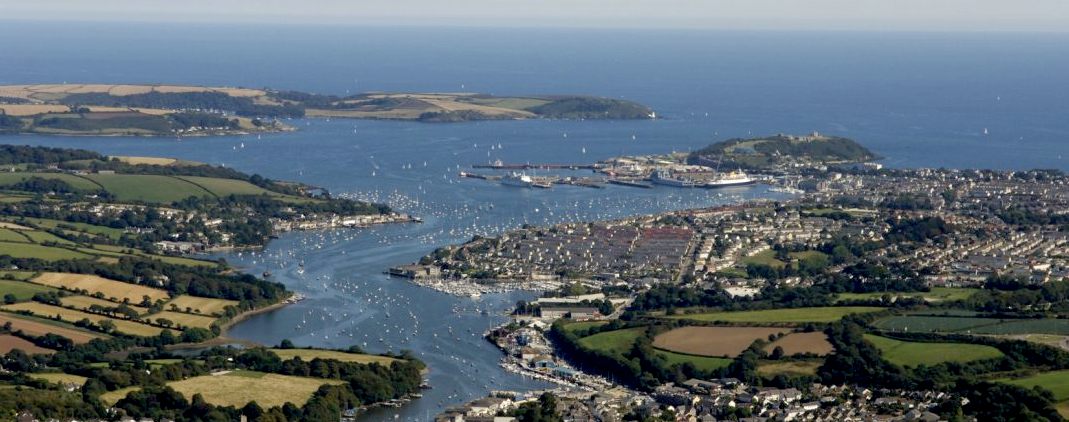
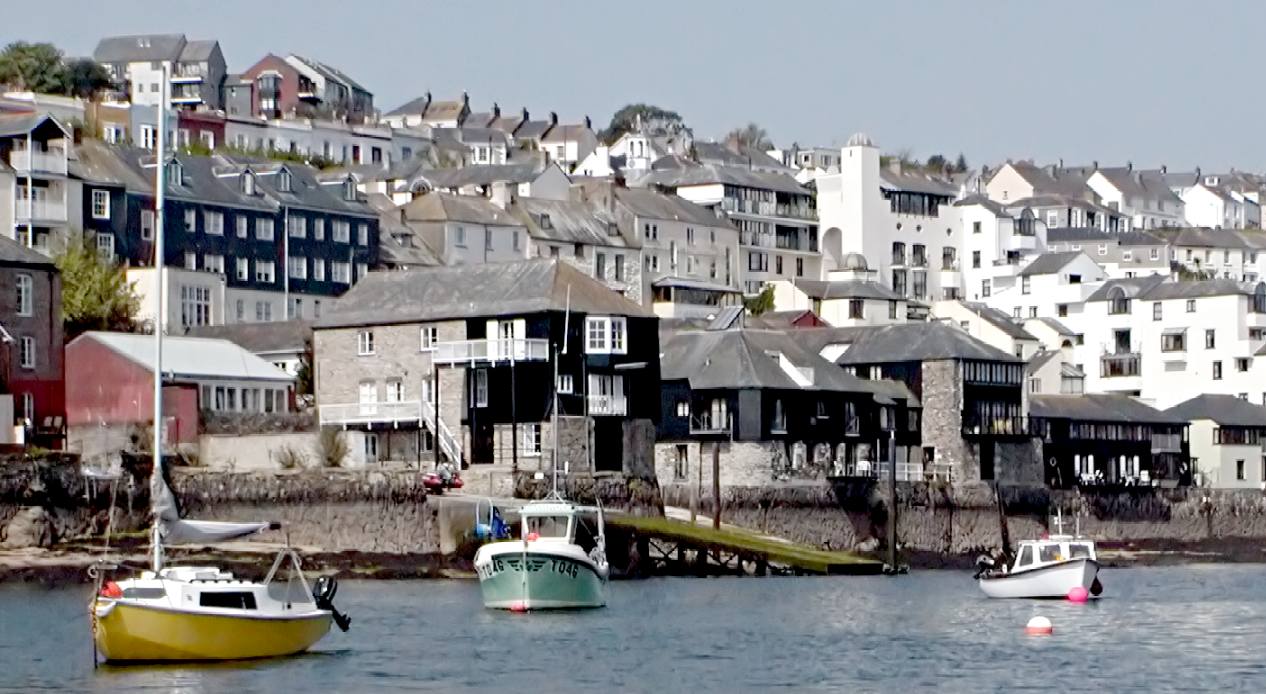
In Britain's Western Approaches lies the port of Falmouth - south west Cornwall's premier resort and home to Cornwall's maritime heritage. Washed by the ocean and warmed by the Gulf stream, the town basks on the shoreline of the world's third largest natural harbour - the gateway to a beautiful network of rivers and creeks.
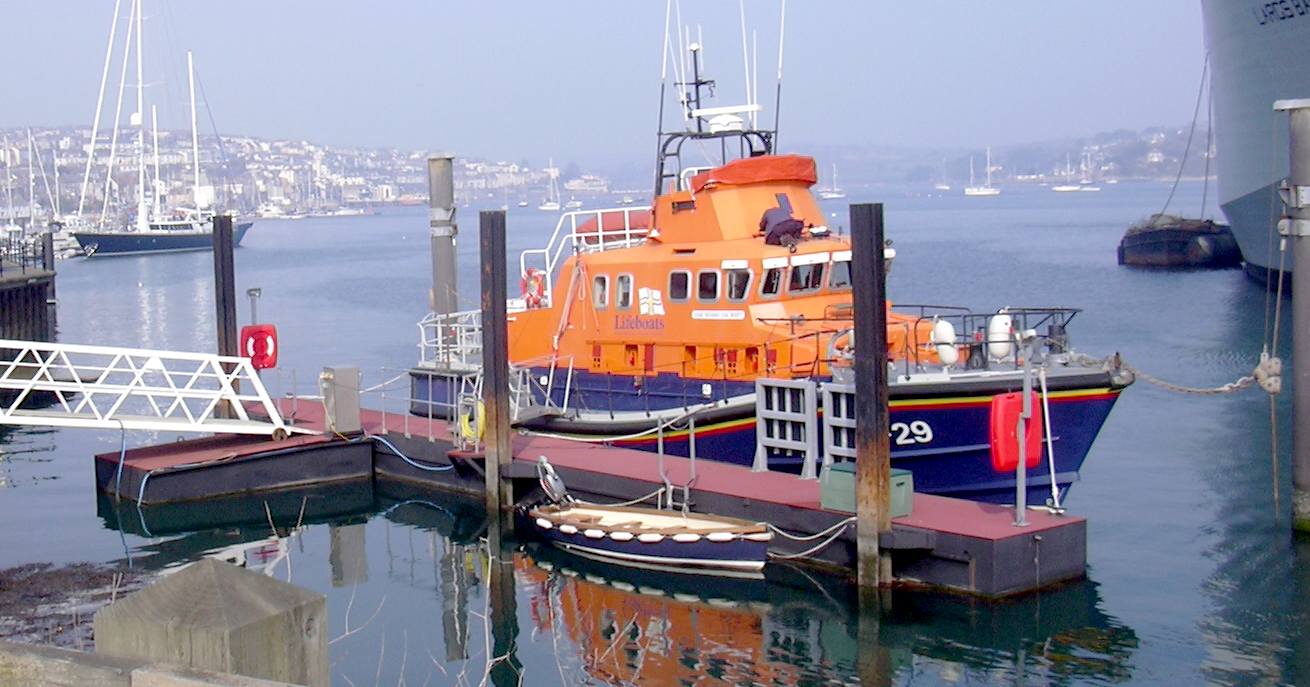
Falmouth lifeboat
Famous for its beaches and castle and infamous for its smugglers and pirates - Falmouth has protected the deep water anchorage of the Carrick Roads since Tudor times.
Getting about could not be easier. Leave your car behind and climb aboard one of the many pleasure boats and ferries which ply the local waters to St Mawes, Flushing, Smuggler's Cottage at Tolverne, Truro and the Helford Passage. Yachts with skippers can be chartered by the day.
ECONOMY,
INDUSTRY & TOURISM
MORE RECENT HISTORY - 19TH & 20TH CENTURY
Email:
Councillor-mdavies@falmouthtowncouncil.com Email:
Councillor-gfevans@falmouthtowncouncil.com Email:
Councillor-sgray@falmouthtowncouncil.com Email:
Councillor-catherton@falmouthtowncouncil.com Email:
Councillor-olivercramp@falmouthtowncouncil.com Email:
Councillor-dmerrett@falmouthtowncouncil.com Email:
Councillor-dwsaunby@falmouthtowncouncil.com
FALMOUTH TOWN TEAM - BUSINESS IMPROVEMENT DISTRICT
FALMOUTH UNIVERSITY
PACKET SHIP
Falmouth was once home to the Packet Ship service which sailed to the Mediterranean and the Americas from 1688 to 1852 carrying mail and goods. These world wide links across the seas led to the development of large private gardens, where exotic plants from as far afield as China and Australasia thrived in the regions subtropical climate.
These award winning gardens are now open to the public and are packed with magnolias, rhododendrons, tree ferns and palms. In addition to Falmouth's four central gardens of Fox Rosehill and Queen Mary - both Green Flag Park Award winners, Kimberley Park and Gyllyngdune, the vast gardens of Trelissick, Glendurgan and Trebah are all within easy reach.
Falmouth Cornwall A bustling friendly place
Surrounded by a beautiful Coastline With many wooded creeks and inlets to explore. Falmouth's heyday began in the 17th & 18th centuries when fast Post Office Packet sailing boats carried mail, and expensive cargo to and from places as far afield as the East Indies and Spain. Nowadays, though Falmouth is still an important ship repair centre, the town is largely dependant upon tourism.
Playing and relaxing on the resort's four main beaches of Gyllyngvase, Castle, Swanpool and Maenporth is a true delight. Feel the sand between your toes as you stroll along these wide expanses, cleansed daily by the ebb and flow of the Atlantic. This is surely the perfect arena for sunbathing, swimming, sandcastle building or simply forgetting the rest of the world exists . . . For a wilder time, try tackling the rapid river run and wave machine at Ships & Castles Leisure Pool on Pendennis Headland or run the gauntlet at Laserforce, Falmouth's live action laser game.
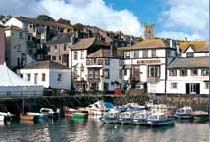
Narrow streets, some cobbled, alleys leading down to the waters edge. Overlooking Customs House Quay the Customs House with its columnaded facade. The quaintly named Kings Pipe. Falmouth has a wide selection of shops, many of whom have a nautical theme- from antique shops to second hand booksellers, to yachting outfitters to boutiques. Many centuries old inns. Art galleries too. In a prime position on Falmouth's Harbourside, is the Greenbank Hotel, originally an old coaching inn, where Kenneth Grahame developed his story the 'Wind in the Willows'. On the seafront, overlooked by Pendennis Castle, are several fine falmouth hotels, such as The Royal Duchy Falmouth's only 4 star hotel.
National Maritime Museum Cornwall
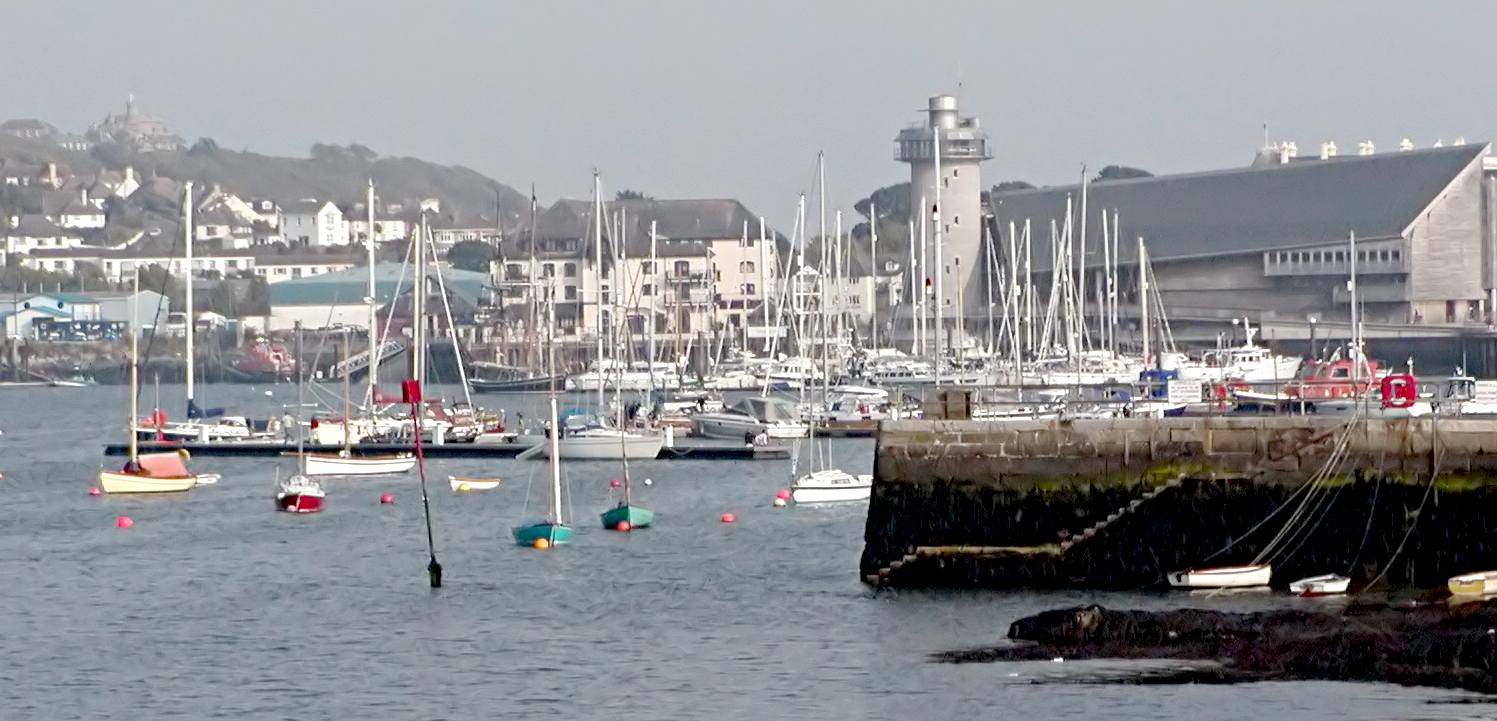
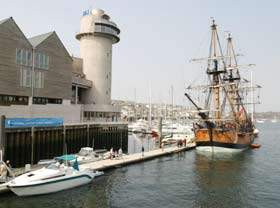
The National Maritime Museum Opened in 2002, bringing the World's boats to Cornwall. The building is the Centrepiece Development on Falmouth's Historic Waterfront Reflecting the towns maritime heritage. It is an eye catching building of modern design, clad in oak with pitched slated roofs. It houses a seductive series of exhibits to anyone interested in the sea.
'An
experience as alive as the sea'
Pirates, Smugglers, Poets, Wreckers, Packet Ship Captains and Cannibals!
Discover Falmouth's nautical and notorious past at the Cornwall Maritime Museum and take a guided maritime walk with our qualified Blue Badge Guides. For a fun tour of the resort try the hop-on hop-off road train linking the town, beaches and castle from Easter to October, just ask at the Tourist Information Centre for details.
Falmouth Harbour and Arwenack House
Explore Falmouth's bustling town centre with its craft shops, fresh seafood sellers, harbourside pubs and restaurants plus chandlers and vendors of all things nautical.
The Arts Centre in the heart of town has a lively programme of events from theatre to film and exhibitions from local artists while the Art Gallery with its Tuke and Waterhouse paintings hosts touring displays from all over Britain.
The Princess Pavilion theatre and tea-rooms are set among the subtropical Gyllyngdune Gardens by the beach and is a great place to pick up bargains at the antique fairs and flea markets held throughout the year. The resort also has the only full size all weather bowling green in Cornwall.
Falmouth is a dazzling waterworld - with sailing and diving schools, local fishing trips and watersports activity centres offering expert advice, tuition and equipment for hire - making it oh so easy for you to spend hours and even days enjoying your favourite water-based activity or even learning a new one.
Along the waterfront from Falmouth's main shopping streets, which link to the quays through narrow alleyways and opes, is the site of the new 'National Maritime Museum Cornwall' which is due to open to the public in 2002. This new complex together with its marina, events square, shops and cafes will bring together collections from the National Maritime Museum in London and Cornwall's Maritime Museum which is currently housed at Bell's Court off Market Street in Falmouth.
Falmouth has come along way since 1600 when it only consisted of two houses, a smithy and an alehouse, but when Sir Walter Raleigh stayed with Sir John Killegrew at Arwenack House, he was so impressed with its geographical features that he recommended that the site should be developed as a port. Sir John gained Parliamentary approval to develop the site and within a few years the village started to grow. Originally known as Smithwick or Smithick it later became known as Pen-y-come-quick ("the head of the narrow vale"). In 1660 a Royal proclamation changed the name to Falmouth. For nearly 300 years Falmouth remained one of the principle ports of the world, where during the mid eighteen hundreds it was not an uncommon site to see 350 ocean-going sailing ships at anchor in the "Carrick Roads" at any one time.
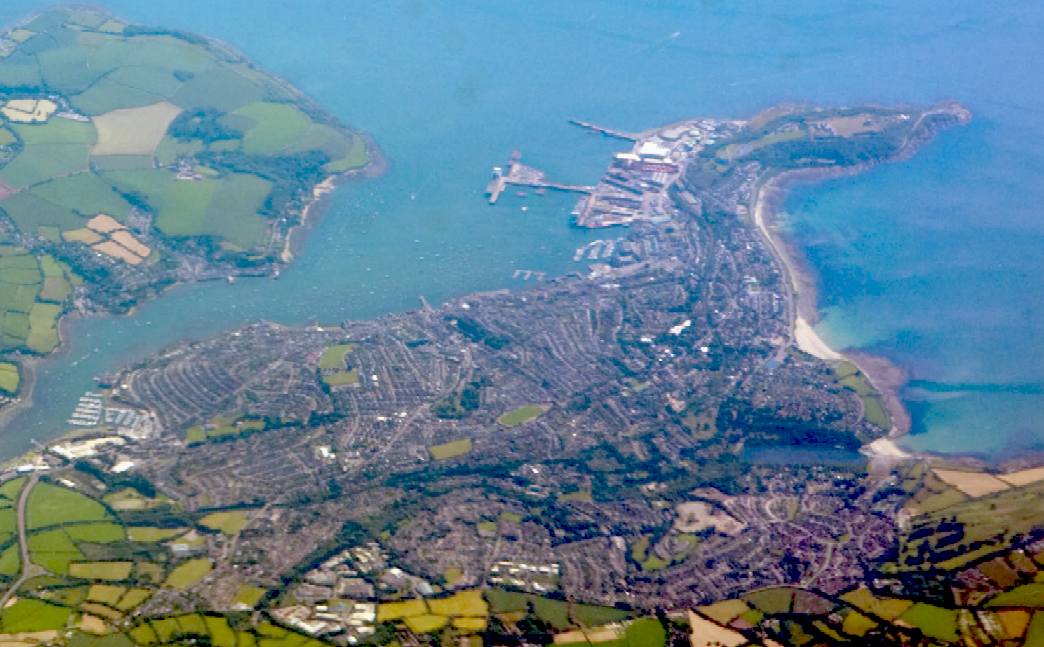
Another aerial view of the town
As Falmouth developed during the seventeenth century, the oldest building that it can boast is the Elizabethan manor of the Killegrew's at Arwenack House. However, much of this was destroyed during the Civil War, and what remained was incorporated into the replacement building built in 1786. The parish church of King Charles the Martyr was built between 1662-64, while off the main streets some of the original 17th and 18th century cottages may still be seen.
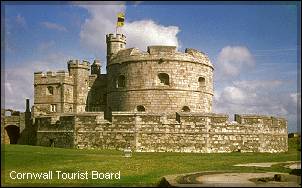
Pendennis Castle
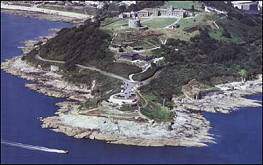
On the nearby headland of Pendennis Point stands the imposing Pendennis Castle, built between 1539-64 by King Henry VIII as a defence against the French. During the Civil War the castle was held for the Crown by the 80 year old Colonel John Arundel of Trerice, who defended it during a six month siege in 1646.
The Parliamentarian besiegers were so impressed with the courage of the Royalist forces, that when they finally surrendered in August 1646, they allowed the 24 officers and 900 men to march out of the castle with full military honours - bearing their weapons and banners flying. Nowadays, the Castle, with its incredible views across the ocean to the headlands of St Mawes and the Lizard Peninsula, resounds to the clamour of battle re-enactments, jousting tournaments and concerts and remains one of Falmouth's principal attractions.
Today Falmouth offers the tourist a variety of facilities and makes an ideal location for exploring the south western coast of the county. Nearby attractions include;St Just in Roseland, Helford Estuary, St Mawes, Lizard Peninsula.
Pendennis Castle
In Tudor times Henry VIII fearing invasion ordered two Castles to be built to guard the Harbour Entrance, forming part of his South Coast defences. On the West side Pendennis and St Mawes Castle on the East Side. During the First World War a Garrison was stationed at the former, During WWII it housed a secret underground base. Both Castles are well preserved and are worth a visit. To reach Pendennis Castle follow Castle Drive around Pendennis Point from the Town. The Drive offers great views down into Falmouth Docks, and across Carrick Roads to St Anthony Light and the Roseland Peninsula. Little Dennis Blockhouse, nestling under the Castle. You are likely to see vessels ranging from Cross Channels Ferries undergoing repair, to container ships, perhaps even a gas drilling rig sheltering in the Harbour until storms at sea die down.
Falmouth Cornwall Sailing and yachting capital of the County, the 3rd largest natural harbour in the World.
Sailing and Yachting around Falmouth
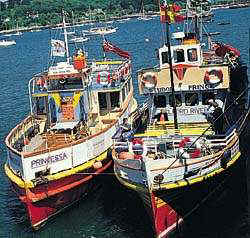
Being sheltered from the prevailing south westerly winds the River Fal is a haven for yachtsmen. Working Boats During the Winter months the Falmouth Working Boats with their distinctive red sails can often still be seen dredging for oysters under sail alone, as they have done for centuries. Pleasure Boat Trips
In
Season take a pleasure boat trip, past Falmouth
Docks, and Black Rock with views to the Castle, then
back up the River, past the Marina 's on to Restronguet
Creek and Mylor as far as Truro
tides permitting. Admire the 500 year thatched Smugglers
Cottage at Tolverne, used by the US Army as an
embarkation point for the D-Day landings. Vessels such
as the Cornish Belle run several daily excursions in
Season. In summer the water in many of the creeks is a
deep blue green colour. In winter most of the visiting
yachtsman have gone, only the wildlife remain - curlew,
oystercatcher, heron, if you are really lucky, a little
egret.
For
many years merchant ships and even oil rigs were laid up
in the River Fal's Upper Reaches. With the upturn in the
World economy in the late 1990's they were gone, only
for other vessels to return in this new Millenuim.. Good
views of them could be had from Tolverne and King Harry
Ferry. There is also a seasonal foot ferry to St
Mawes.
Around and about Falmouth
Along the Coast towards the mouth of the Helford, are Swanpool and Gyllyngvase beaches, and numerous Falmouth hotels all offering a high standard of accommodation. Continue West and you reach the very unspoilt Helford River, with yet more creeks and inlets to explore. Gardens such as Trebah with its tree ferns and the National Trust owned Glendurgan. Beyond that lies the Helford River and the Lizard Peninsula .
Cobbled
streets, old pastel coloured cottages down to the waters
edge. Beware of swans. Flushing granite quays, around
the Corner Trefusis Point and Lime Kiln Beach, with
superb views down river. Mylor Yacht Harbour offering
pontoon berths and swinging moorings http://www.mylor.com/ USEFUL LINKS:
Facebook
Falmouth spirit of the sea http://www.rmg.co.uk/national-maritime-museum http://www.rmg.co.uk/national-maritime-museum https://www.facebook.com/pages/Falmouth-Spirit-of-the-sea/160909917286676?v=wall https://www.falmouthtowncouncil.co.uk/
Nice
Places to Stay | Holiday
and Touring Parks | Hotels
and Country Houses Home | Towns and Villages | Places to stay | Just nice pictures | Customs and Culture | Places to See | Cornwall Map | Gardens | Getting Here | Cornwall Coast | Cornish Life | Good Beach Guide | Walking | Things to do | Tourist Brochures Cornwall Online | Penzance | Porthleven | Mullion | Helston | Falmouth | Truro Falmouth | St Mawes | National Maritime Museum | Roseland Peninsula | Helford River | The Lizard
Where to Stay in Falmouth Accommodation in Falmouth
The National Seal Sanctuary is set in the picturesque Helford Estuary, by the beautiful village of Gweek, in Cornwall. The Sanctuary is a busy rescue centre, and also has resident Grey Seals, Californian and Patagonian Sea Lions, Goats, Ponies and Otters CLICK HERE FOR DETAILS
|
|||||||||||||
|
This website is Copyright © 1999 & 2015 Max Energy Limited, an environmental educational charity working hard for world peace. The names SeaVax™, Miss Ocean™and Utopia Tristar™ are trademarks. All other trademarks are hereby acknowledged.
|