|
BIOGRAPHY
George Lucas was raised
on a walnut ranch in Modesto, California. His father was a
stationery store owner and he had three siblings. During his
late teens he went to Downey High School and was very much
interested in drag car racing. He planned to become a
professional racecar driver. However a terrible car accident
just after his high school graduation ended that dream
permanently. The accident changed his views on life. He decided
to attend Modesto Junior College before enrolling in the
University of Southern California film school. As a film student
he made several short films including THX-1138: 4EB (Electronic
Labyinth) which won first prize at the 1967-68 National Student
Film Festival. In 1967 he was awarded
a scholarship by Warner Brothers to observe the making of Finian's
Rainbow (1968) which was being directed by Francis
Ford Coppola. Lucas and Coppola became good friends and
formed a company called American Zoetrope in 1969. The company's
first project was Lucas' full-length version of THX
1138 (1971). In 1971, Coppola went into production for The
Godfather (1972), and Lucas formed his own company,
Lucasfilm Ltd. In 1973 he wrote and directed the
semi-autobiographical American
Graffiti (1973) which won the Golden Globe and garnered five
Academy Award
nominations. This gave him the clout he needed for his next
daring venture.
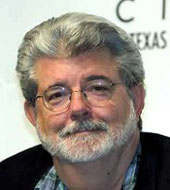
George
Lucas
From 1973 to 1974 he began writing the
screenplay for Star
Wars (1977). He was inspired to make this movie from Flash
Gordon and the Planet of the Apes films. In 1975 he established
ILM (Industrial Light & Magic) to produce the visual effects
needed for the movie. Another company called Sprocket Systems
was established to edit and mix Star Wars and later becomes
known as Skywalker Sound. His movie was turned down by several
studios until Twentieth Century Fox gave him a chance. Lucas
agreed to forgo his directing salary in exchange for 40% of the
film's box-office take and all merchandising rights.
The movie
went on to break all box office records and earned seven Academy
Awards. It
redefined the term "blockbuster". The rest is history.
Lucas made the other Star Wars films and along with Steven
Spielberg created the Indiana Jones series which made box
office records of their own. From 1980 to 1985 Lucas was busy
with the construction of Skywalker Ranch, built to accommodate
the creative, technical, and administrative needs of Lucasfilm.
Lucas also revloutionized movie theaters with the THX System
which was created to maintain the highest quality standards in
motion picture viewing. He went on to make several more movies
that have created major breakthroughs in film making. He is
chairman of the board of The George Lucas Educational
Foundation. In 1992 George Lucas was honored with the Irving G.
Thalberg Award
by the Board of Governors of the Academy of Motion Picture Arts
and Sciences for his lifetime achievement.
Date of birth:
14
May 1944
Location:
Modesto,
California, USA
Birth name: George Walton Lucas
Jr.
Height 5' 6" (1.68 m)
Sometimes Credited As: Lucas
Spouse
Marcia
Lucas (22
February 1969
- 1983) (divorced)
TRADE MARK
Letters/numbers THX-1138
(name of his first "real" movie) appears in many
films: The licence plate number on Milner's deuce coupe in American
Graffiti (1973) was THX 138. A battle droid who captures Jar
Jar Binks and the Gungans has the number 1138 written on his
back. In Star
Wars (1977), Luke Skywalker said (with reference to
Chewbacca) "Prisoner
transfer from cell block 1138." In Star
Wars: Episode V - The Empire Strikes Back (1980), General
Rieekan says, "Send Rogues ten and eleven (11) to station
three-eight (38)." His films usually
feature a battle scene which takes place around a large shaft or
pit.
TRIVIA
Three adopted children:
Amanda
Lucas (aka Amanda Lucas, b. 1981), Katie
Lucas (b. 1988), and Jett
Lucas(b. 1993). Attended University of
Southern California School of Cinema.
In his early twenties he
was in a severe road accident and spent many months in the
hospital. And when in the hospital he created the concept of the
Force.
Lucas provided all the
funding for Star
Wars: Episode V - The Empire Strikes Back (1980), Star
Wars: Episode VI - Return of the Jedi (1983) and Star
Wars: Episode I - The Phantom Menace (1999).
For 2nd consecutive
year, ranked No. 4 on Entertainment Weekly's annual list of
"101 Most Powerful People in Entertainment." Ranked
just ahead of Steven
Spielberg and just behind the power couple that runs Time
Warner Turner media empire.
Sits on USC School of
Cinema-Television's Board of Councilors. In the 2001 edition of
the Forbes' "400 Richest People In America", it is
reported that Lucas' fortune is $3 billion. Ranked #10 in Premiere's
2003 annual Power 100 List. Had ranked #14 in 2002. He is a diabetic.
Frequently uses the
famous "Wilhelm Scream" sound effect in his films.
This sound effect has been used in dozens of movies. He has created the image
of always being on the cutting edge of technology. However, when
he writes, he does it in longhand in a loose leaf binder rather
than on a word processor.
He was so impressed with
relatively unknown stage actor James
Wheaton that he cast him over studio objections in the
voiceover role of "OMM" in THX
1138 (1971). The studio wanted Orson
Welles to play the role.
His script for
Star
Wars (1977) was turned down by every major Hollywood studio,
the reason being that no one would want to see it. In a last
ditch attempt, Lucas approached 20th Century Fox who decided to
go ahead with the script even though they were convinced it
would flop. Star Wars ended up becoming the highest grossing
movie ever released at that time. It still ranks as one of the
highest grossing movies ever made to this day.
Sold Lucasfilm's
Computer Graphics Division to Apple Computer co-founder Steve
Jobs, and it later became Pixar Animation Studio. His name backwards is
Egroeg Sacul. This name is also used in the Disney theme park
ride Star Tours
(1987). Rewrote the ending of Raiders
of the Lost Ark (1981) to tighten it up due to the fact that
the scene would have been too busy. It originally ended with the
mine-car chase that was later added to Indiana
Jones and the Temple of Doom (1984).
Conceived Indiana Jones
while on vacation with his friend Steven
Spielberg in Hawaii. Lucas decided to produce while
Spielberg would direct. Had a long romantic
involvement with Linda
Ronstadt. With THX
1138 (1971) and Star
Wars (1977), Lucas re-invented the way sound was used in
films. Using it in both a linear and abstract way, to tell the
story, he pushed sound design to the forefront of the filmmaking
process. Refuses to put
"critics quotes" on his movie posters. Something that
infuriates many critic societies.
Ranked #16 in Premiere's
2004 annual Power 100 list. Had ranked #10 in 2003. Biography in: John
Wakeman, editor. "World Film Directors, Volume Two,
1945-1985". Pages 605-610. New York: The H.W. Wilson
Company, 1988. He based the character
of Han Solo on his friend Francis
Ford Coppola. He originally wanted his
friend Steven
Spielberg to direct Star
Wars: Episode VI - Return of the Jedi (1983), but his
dispute with the Director's Guild barred him from doing so. He
settled for director Richard
Marquand instead.
Became so stressed
during the filming of the original Star
Wars (1977) that he checked himself into a hospital, where
he was diagnosed with hyper-tension. Said that Alec
Guinness was very helpful to him during the filming of the
original Star
Wars (1977) even to the point of getting the other actors to
work more seriously. Disowned Howard
the Duck (1986) after the film's release.
When he began his
apprenticeship at Warner Brothers, what he wanted to see most
was the Animation Department. He claims that the day he arrived
on the lot was the very day the Animation Department was closed
down. According to Lucas, one
of the themes in all of his films is man's relationship to
machines and technology - either controlling them, or being
controlled by them.
Despite a reputation as
Hollywood blockbusters, all of the Star Wars films are actually
independent films, with the exception of Star Wars Episode IV: A
New Hope. The only way he could get the required funding to make
the film was to apply for studio funding. With the success of
the film and its merchandising, Lucas no longer needed to go to
the studios. For Episodes V and VI, he took out bank loans,
which he paid off on each films' earnings. For the Prequel
Trilogy, he no longer needed bank loans, having made enough
money to fund each film out of his own personal savings.
He made what was at the
time an unusual deal for the film, Raiders
of the Lost Ark (1981). Paramount financed the film's entire
$20 million budget. In exchange, Lucas would own over 40% of the
film and collect almost half of the profits after the studio a
grossed a certain amount. It turned out to be a very lucrative
deal for Lucas. Paramount executive Michael
Eisner said that he felt the script for the film was the
best he had ever read.
Won the American Film
Institute's Life Time Achievement Award.
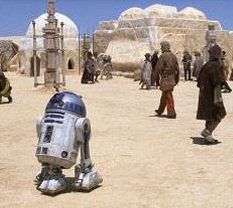
Star
Wars droid - R2D2
QUOTES
"A special effect
is a tool, a means of telling a story. A special effect without
a story is a pretty boring thing."
"The sound and
music are 50% of the entertainment in a movie"
"The script is what
you've dreamed up-this is what it should be. The film is what
you end up with."
"I am simply trying
to struggle through life; trying to do God's bidding."
On the making of
Star
Wars (1977): "When you're directing, you have to get up
at four thirty [A.M], have breakfast at five, leave the hotel at
six, drive an hour to location, start shooting at eight, and
finish shooting around six. Then you wrap, go to your office,
and set up the next day's work. You get back to the hotel about
eight or nine, hopefully get a bite to eat, then you go to your
room and figure out your homework, how you're going to shoot the
next day's scenes, then you go to sleep. The next morning it
starts all over again."
"I took over
control of the merchandising not because I thought it was going
to make me rich, but because I wanted to control it. I wanted to
make a stand for social, safety, and quality reasons. I didn't
want someone using the name 'Star Wars' on a piece of
junk."
"The object is to
try to get the (movie) system to work for you, instead of
against you. And the only way you can do it is through success,
I'm afraid"
"Making a film is
like putting out a fire with a sieve. There are so many elements,
and it gets so complicated"
"To be renewed is
everything. What more could one ask for than to have one's youth
back again?"
"He is his own man,
he is not a son anymore, he is an equal." - describing Luke
Skywalker after his duel with Darth Vader in Star
Wars: Episode V - The Empire Strikes Back (1980). "I wanted to make
abstract films that are emotional, and I still do."
"He is one of the
best. He's outwitted the empire on numerous occaisons, and he
has made some very fast deals. One of his problems is that he
gambles quite heavily and that's where he loses most of his
money. He's tough and sharp, but never manages to scrape
together enough to get any power...He's slightly
self-destructive and he sort of enjoys being on the brink of
disaster...You might meet him and he may be worth ten billion
dollars and the next time you meet him he's in debt up to his
ears." - Describing Han Solo
"It's hard work
making movies. It's like being a doctor:you work long hours,
very hard hours, and it's emotional, tense work. If you don't
really love it, then it ain't worth it."
"From being a
struggling. starving filmmaker to being incredibly successful in
a period of a couple of years is quite a powerful experience,
and not necessarily a good one."
"I've had a very
volatile relationship with Francis (Ford Coppola). It's on both
sides, like we were married and we got divorced. It's as close a
relationship as I've had with anybody."
"If you can tune
into the fantasy life of an 11-year-old girl, you can make a
fortune in this business."
Regarding
Star
Wars: Episode III - Revenge of the Sith (2005): "Right
or wrong this is my movie, this is my decision, and this is my
creative vision, and if people don't like it, they don't have to
see it."
"I am very
concerned about our national heritage, and I am very concerned
that films that I watched when I was young and the films that I
watched throughout my life are preserved, so that my children
can see them."
(On Gangs of New York)
"We showed a print of it at the Skywalker Ranch. I was
amazed by what he (Scorsese) did with it and where he went. It
was terrific."
"The parallels
between what we did in Vietnam and what we're doing in Iraq now
are unbelievable."
I've worked hard enough
and earned enough to fail for the rest of my life. And I'm gonna
do it!! - About making art films that he admits no one will want
to see.
[When asked what it was
like to watch Steven Spielberg direct] "It's like watching
Albert Einstein or Thomas Edison. It's like watching Michael
Jordan or Tiger Woods, any genius you can name."
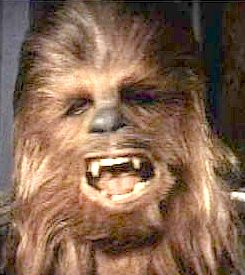
Chewbacca
SALARY
|
Star
Wars: Episode I - The Phantom Menace (1999)
|
$400,000,000
|
|
Raiders
of the Lost Ark (1981)
|
$2,500,000 + net
profits
|
|
Body
Heat (1981)
|
$250,000 + 5% of
profits
|
|
Star
Wars (1977)
|
$200,000 + 40% of
the net profits
|
|
American
Graffiti (1973)
|
$50,000 + 15% of
gross
|
|
THX
1138 (1971)
|
$15,000
|
|
The
Rain People (1969)
|
$3,000
|
|
Finian's
Rainbow (1968)
|
$3,000
|
Biography from Leonard Maltin's Movie
Encyclopedia:
Despite the fact that he
has directed only a handful of films, George Lucas' name looms
large in the motion picture industry. The staggering success of
his films enabled him to become his own mogul, overseeing both
moviemaking projects and technical developments that have made
him Hollywood's foremost futurist. A child of the TV generation,
Lucas studied film at the University of Southern California
(where one of his teachers was Jerry Lewis). He had already made
several short subjects when he won an internship at Warner
Bros., where he met Francis Ford Coppola, who was making Finian's
Rainbow there. Coppola took him on as an assistant, and
allowed him to make a cinema-verité documentary about his next
production, The
Rain People which Lucas called Filmmaker
(1968).
Coppola then persuaded the studio to finance an
expansion of Lucas' student film into the feature-length THX-1138
(1971), an intelligent if somewhat nihilistic sci-fi yarn. The
film's poor box-office performance persuaded Lucas to direct his
energies toward a project with mainstream appeal. Coppola's
willingness to serve as executive producer persuaded Universal
to finance Lucas' American
Graffiti (1973), a semiautobiographical coming-of-age story
set in 1962 that took off like a rocket and became one of the
decade's biggest hits, launching a number of young actors on the
road to stardom. It also earned the young filmmaker dual Oscar
nominations, as director and coscreenwriter.
Over the next few years Lucas developed his next project,
another sci-fi outing, but with a very different sensibility. Star
Wars (1977) synthesized elements of hokey old space operas
and serials Lucas had enjoyed as a kid, and even borrowed from
Akira Kurosawa's 1958 adventure The Hidden Fortress but
had a popculture feeling all its own. As with Graffiti
the studio that backed this project had no faith in it
whatsoever, and it came as a total surprise that Star Wars
became a megahit-no, more of a phenomenon It earned more
than $400 million dollars, and in fact helped usher in the era
of the blockbuster hit (for better or worse).
It spun off a
mini-industry of its own, and saw its characters become part of
contemporary lore. (Lucas also received Oscar nominations for
writing and directing the picture.) What's more, the film
inspired Lucas to establish his own full-time special effects
company, Industrial Light and Magic (ILM), which would create
dazzling new illusions for the Star Wars sequels, The
Empire Strikes Back (1980) and Return
of the Jedi (1983). With the clout his earnings gave him, he
saw no need to work in Hollywood, and built his own filmmaking
"empire"-actually a ranch named after his character
Luke Skywalker-on his home turf in Northern California to house
Lucas Film Ltd.
He also decided to relinquish the director's chair and escape
from that nervewracking job. He and another Bay Area filmmaker,
Philip Kaufman, created the character of archeologist/adventurer
Indiana Jones (inspired, again, by old-time Saturday matinee
serials), and persuaded Steven Spielberg to direct Raiders
of the Lost Ark (1981), which Lucas also coexecutive
produced. This gave him yet another film in the All-Time
Top-Grossing Hits roster, and led to a pair of sequels, Indiana
Jones and the Temple of Doom (1984) and Indiana Jones and
The Last Crusade (1989). Lucas later brought his character
to television in the lavishly produced, award-winning (but,
sadly, little seen) series "The Young Indiana Jones
Chronicles" (1992- ).
Lucas was also responsible for executive producing such other
films as More
American Graffiti (1979), Body
Heat (1981, for which he took no screen credit), Twice
Upon a Time (1983), Mishima (1985), the notorious
flop Howard the
Duck(1986), Labyrinth
(1986), The Land
Before Time, Tucker:
The Man and His Dream (for Coppola), Willow
(all 1988), and Radioland
Murders (1994, from a story he had written years earlier).
He also executive produced and wrote the screenplay for the 3-D
Disneyland attraction Captain
EO (1986), which Francis Coppola directed. In addition to
LucasFilm Ltd. and Industrial Light and Magic, Lucas also
developed the THX Sound System, which sought to improve the
quality of sound in movie theaters. In 1992 he was given the
prestigious Irving Thalberg Award by the Academy of Motion
Picture Arts and Sciences. As for his millions of fans, Lucas
has promised them a new series of Star Wars adventures to
come.
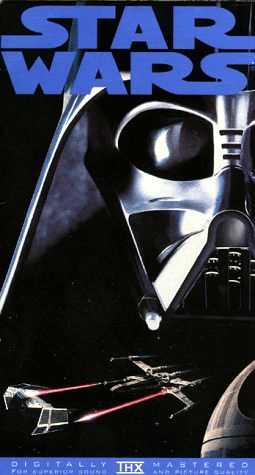
Star
Wars DVD
Filmography as: Writer,
Producer, Miscellaneous Crew,
Director, Editor, Cinematographer,
Actor, Sound Department,
Second Unit Director or Assistant Director,
Himself, Notable
TV Guest Appearances
Writer -
filmography
(In Production) (2000s)
(1990s) (1980s)
(1970s) (1960s)
-
Indiana
Jones 4 (2006) (announced)
(characters) (story)
-
"Untitled
Clone Wars TV Series" (2006) TV Series
(announced)
(characters and universe)
-
"Untitled
Star Wars TV Series" (2006) TV Series
(announced)
(characters and universe)
-
Star
Wars: Episode III - Revenge of the Sith (2005) (written
by)
-
"Star
Wars: Clone Wars" (2003) TV Series
(characters and universe)
-
Star
Wars: Episode II - Attack of the Clones (2002)
(screenplay) (story)
... aka Attack of the Clones: The IMAX Experience (USA: IMAX
version (promotional title))
... aka Star Wars II (USA: promotional abbreviation)
... aka Star Wars II: Attack of the Clones (USA: video box
title)
-
R2-D2:
Beneath the Dome (2001) (TV) (character: R2-D2) (uncredited)
-
Star
Wars: Obi-Wan (2001) (VG) (characters)
-
Star
Wars: Episode I - The Phantom Menace (1999) (written by)
... aka Star Wars I: The Phantom Menace (USA: video box
title)
... aka The Phantom Menace (USA: short title)
-
The
Dark Redemption (1999) (characters)
... aka Star Wars: The Dark Redemption (USA: video box
title)
-
The
Adventures of Young Indiana Jones: Adventures in the Secret
Service (1999) (V) (characters)
-
The
Adventures of Young Indiana Jones: Masks of Evil (1999)
(V) (characters)
-
The
Adventures of Young Indiana Jones: Spring Break Adventure
(1999) (V) (Mexican segment) (characters)
-
The
Adventures of Young Indiana Jones: The Trenches of Hell
(1999) (V) (characters)
-
Star
Wars: Yoda Stories (1997) (VG) (characters)
... aka Yoda Stories (USA: short title)
-
Young
Indiana Jones and the Treasure of the Peacock's Eye
(1995) (TV) (characters)
-
Young
Indiana Jones and the Attack of the Hawkmen (1995) (TV)
(characters)
-
Radioland
Murders (1994) (story)
-
Star
Wars: Rebel Assault (1993) (VG) (characters)
-
Indiana
Jed (1992) (V) (stories)
... aka Indiana Jed & the Search for the Infinite Power
(USA: reissue title (shorter version))
-
Indiana
Jones and the Fate of Atlantis (1992) (VG) (characters)
... aka Indy 4 (USA: informal short title)
-
Indiana
Jones and the Last Crusade (1989) (characters) (story)
-
Willow
(1988) (story)
-
Star
Wars (1988) (VG) (story and screenplay)
-
Captain
EO (1986) (story)
-
Ewoks:
The Battle for Endor (1985) (TV) (story)
-
"Droids"
(1985) TV Series (characters)
... aka Droids: The Adventures of R2D2 and C3PO
... aka Star Wars: Droids
-
"Ewoks"
(1985) TV Series (characters)
... aka Ewoks & Droids Adventure Hour (new title)
... aka Star Wars: Ewoks
... aka The All New Ewoks (new title)
-
The
Ewok Adventure (1984) (TV) (story)
... aka Caravan of Courage
... aka Caravan of Courage: An Ewok Adventure (UK:
theatrical title)
-
Indiana
Jones and the Temple of Doom (1984) (story)
-
Star
Wars: Episode VI - Return of the Jedi (1983)
(screenplay) (story)
... aka Return of the Jedi (USA: short title)
... aka Star Wars VI: Return of the Jedi (USA: video box
title)
-
Star
Wars (1983) (VG)
-
Raiders
of the Lost Ark (1981) (story)
... aka Indiana Jones and the Raiders of the Lost Ark (USA:
video title)
-
Star
Wars: Episode V - The Empire Strikes Back (1980) (story)
... aka Star Wars V: The Empire Strikes Back (USA: video box
title)
... aka The Empire Strikes Back (USA: short title)
-
More
American Graffiti (1979) (characters)
... aka Purple Haze
-
The
Star Wars Holiday Special (1978) (TV) (uncredited)
-
Star
Wars (1977) (written by)
... aka Guerra de las estrellas, La (USA: Spanish title)
... aka Star Wars IV: A New Hope (USA: video box title)
... aka Star Wars: Episode IV - A New Hope (USA: reissue
title (new title))
-
American
Graffiti (1973) (written by)
-
THX
1138 (1971) (earlier screenplay) (screenplay) (story)
-
Electronic
Labyrinth THX 1138 4EB (1970)
-
Filmmaker
(1968)
... aka Filmmaker: A Diary by George Lucas
-
6-18-67
(1967)
-
Anyone
Lived in a Pretty How Town (1967)
-
The
Emperor (1967)
-
1:42:08:
A Man and His Car (1966)
... aka 1:42.08 to Qualify (USA)
-
Freiheit
(1966) (as Lucas)
-
Herbie
(1966)
-
Look
at Life (1965)
Filmography as: Writer,
Producer, Miscellaneous Crew,
Director, Editor, Cinematographer,
Actor, Sound Department,
Second Unit Director or Assistant Director,
Himself, Notable
TV Guest Appearances
Producer -
filmography
(In Production) (2000s)
(1990s) (1980s)
(1970s) (1960s)
-
Indiana
Jones 4 (2006) (announced)
(executive producer)
-
"Untitled
Clone Wars TV Series" (2006) TV Series
(announced)
(executive producer)
-
"Untitled
Star Wars TV Series" (2006) TV Series
(announced)
(executive producer)
-
Star
Wars: Episode III - Revenge of the Sith (2005)
(executive producer)
-
"Star
Wars: Clone Wars" (2003) TV Series
(executive producer)
-
Star
Wars: Episode II - Attack of the Clones (2002)
(executive producer)
... aka Attack of the Clones: The IMAX Experience (USA: IMAX
version (promotional title))
... aka Star Wars II (USA: promotional abbreviation)
... aka Star Wars II: Attack of the Clones (USA: video box
title)
-
Star
Wars: Episode I - The Phantom Menace (1999) (executive
producer)
... aka Star Wars I: The Phantom Menace (USA: video box
title)
... aka The Phantom Menace (USA: short title)
-
The
Adventures of Young Indiana Jones: Adventures in the Secret
Service (1999) (V) (executive producer)
-
The
Adventures of Young Indiana Jones: Masks of Evil (1999)
(V) (executive producer)
-
The
Adventures of Young Indiana Jones: Spring Break Adventure
(1999) (V) (executive producer)
-
The
Adventures of Young Indiana Jones: The Trenches of Hell
(1999) (V) (executive producer)
-
Young
Indiana Jones and the Treasure of the Peacock's Eye
(1995) (TV) (executive producer)
-
Young
Indiana Jones and the Attack of the Hawkmen (1995) (TV)
(executive producer)
-
Radioland
Murders (1994) (executive producer)
-
Young
Indiana Jones and the Hollywood Follies (1994) (TV)
(executive producer)
-
"The
Young Indiana Jones Chronicles" (1992) TV Series
(executive producer)
-
The
Adventures of Young Indiana Jones: Daredevils of the Desert
(1992) (V) (executive producer)
-
Wow!
(1990) (V) (executive producer)
-
Indiana
Jones and the Last Crusade (1989) (executive producer)
-
The
Land Before Time (1988) (executive producer)
-
Tucker:
The Man and His Dream (1988) (executive producer)
-
Willow
(1988) (executive producer)
-
Powaqqatsi
(1988) (executive producer)
... aka Powwaqatsi: Life in Transformation (USA: poster
title)
-
Star
Tours (1987) (executive producer)
-
Captain
EO (1986) (executive producer)
-
Howard
the Duck (1986) (executive producer)
... aka Howard: A New Breed of Hero
-
Labyrinth
(1986) (executive producer)
-
Inside
the Labyrinth (1986) (TV) (executive producer)
-
Ewoks:
The Battle for Endor (1985) (TV) (executive producer)
-
Mishima:
A Life in Four Chapters (1985) (executive producer)
... aka Mishima (USA: short title)
-
"Droids"
(1985) TV Series (executive producer)
... aka Droids: The Adventures of R2D2 and C3PO
... aka Star Wars: Droids
-
"Ewoks"
(1985) TV Series (executive producer)
... aka Ewoks & Droids Adventure Hour (new title)
... aka Star Wars: Ewoks
... aka The All New Ewoks (new title)
-
Latino
(1985) (executive producer) (uncredited)
-
The
Ewok Adventure (1984) (TV) (executive producer)
... aka Caravan of Courage
... aka Caravan of Courage: An Ewok Adventure (UK:
theatrical title)
-
Indiana
Jones and the Temple of Doom (1984) (executive producer)
-
Twice
Upon a Time (1983) (executive producer)
-
Star
Wars: Episode VI - Return of the Jedi (1983) (executive
producer)
... aka Return of the Jedi (USA: short title)
... aka Star Wars VI: Return of the Jedi (USA: video box
title)
-
Raiders
of the Lost Ark (1981) (executive producer)
... aka Indiana Jones and the Raiders of the Lost Ark (USA:
video title)
-
Body
Heat (1981) (executive producer) (uncredited)
-
Star
Wars: Episode V - The Empire Strikes Back (1980)
(executive producer)
... aka Star Wars V: The Empire Strikes Back (USA: video box
title)
... aka The Empire Strikes Back (USA: short title)
-
Kagemusha
(1980) (executive producer: international version)
... aka Kagemusha (The Shadow Warrior)
... aka Kagemusha the Shadow Warrior
... aka Shadow Warrior
... aka The Double
-
More
American Graffiti (1979) (executive producer)
... aka Purple Haze
-
Star
Wars (1977) (executive producer)
... aka Guerra de las estrellas, La (USA: Spanish title)
... aka Star Wars IV: A New Hope (USA: video box title)
... aka Star Wars: Episode IV - A New Hope (USA: reissue
title (new title))
-
The
Rain People (1969) (associate producer)
Filmography as: Writer,
Producer, Miscellaneous Crew,
Director, Editor, Cinematographer,
Actor, Sound Department,
Second Unit Director or Assistant Director,
Himself, Notable
TV Guest Appearances
Miscellaneous Crew
- filmography
(2000s) (1990s)
(1980s) (1970s)
(1960s)
-
Sith
Apprentice (2005) (special thanks)
-
Robots
(2005) (special thanks)
... aka Robots: The IMAX Experience (USA: IMAX version)
-
Star
Wars: Battlefront (2004) (VG) (very special thanks)
-
Star
Wars: Knights of the Old Republic (2003) (VG) (very
special thanks)
... aka Star Wars: KOTOR (USA: short title)
-
Star
Wars: The Clone Wars (2002) (VG) (very special thanks)
-
Naqoyqatsi
(2002) (continuing thanks)
... aka Naqoyqatsi: Life as War (USA: poster title)
-
The
Jedi Hunter (2002) (special thanks)
-
Spy
Kids 2: Island of Lost Dreams (2002) (special thanks)
... aka Spy Kids 2: The Island of Lost Dreams (USA: video
box title)
-
The
Official Star Wars Fan Film Awards (2002) (TV) (very
special thanks)
-
Darth
Vader's Psychic Hotline (2002) (special thanks)
-
Crazy
Watto (2000) (special thanks)
-
Torre
(2000) (thanks)
-
StarCraft
(1998) (VG) (thanks)
-
The
Making of 'E.T. The Extra-Terrestrial' (1996) (V)
(special thanks)
... aka E.T.: The Extra-Terrestrial - A Look Back (USA: cut
version)
-
Mortimer
and the Riddles of the Medallion (1996) (VG) (special
thanks)
-
The
Indian in the Cupboard (1995) (special thanks)
-
Jurassic
Park (1993) (special thanks)
... aka JP (USA: promotional abbreviation)
-
Leprechaun
(1993) (special thanks)
-
Visions
of Light (1992) (special thanks from afi)
... aka Visions of Light: The Art of Cinematography
-
Monkey
Island 2: LeChuck's Revenge (1991) (VG) (special thanks)
-
The
Godfather: Part III (1990) (special thanks)
... aka Mario Puzo's The Godfather: Part III (USA: complete
title)
-
Loom
(1990) (VG) (special thanks)
-
Indiana
Jones and the Last Crusade (1989/II) (VG) (special
thanks)
-
Return
to Oz (1985) (special thanks)
-
Star
Wars: Episode VI - Return of the Jedi (1983) (music
producer) (uncredited)
... aka Return of the Jedi (USA: short title)
... aka Star Wars VI: Return of the Jedi (USA: video box
title)
-
Star
Wars: Episode V - The Empire Strikes Back (1980) (music
producer) (uncredited)
... aka Star Wars V: The Empire Strikes Back (USA: video box
title)
... aka The Empire Strikes Back (USA: short title)
-
Kagemusha
(1980) (presenter)
... aka Kagemusha (The Shadow Warrior)
... aka Kagemusha the Shadow Warrior
... aka Shadow Warrior
... aka The Double
-
More
American Graffiti (1979) (music selection)
... aka Purple Haze
-
Star
Wars (1977) (music producer) (uncredited)
... aka Guerra de las estrellas, La (USA: Spanish title)
... aka Star Wars IV: A New Hope (USA: video box title)
... aka Star Wars: Episode IV - A New Hope (USA: reissue
title (new title))
-
Gimme
Shelter (1970) (camera operator)
-
The
Rain People (1969) (production assistant)
-
Finian's
Rainbow (1968) (production assistant) (uncredited)
-
Why
Man Creates (1968) (camera operator)
-
Grand
Prix (1966) (additional camera operator)
-
The
Bus (1965) (production assistant)
-
Journey
to the Pacific (????) (assistant editor)
Filmography as: Writer,
Producer, Miscellaneous Crew,
Director, Editor, Cinematographer,
Actor, Sound Department,
Second Unit Director or Assistant Director,
Himself, Notable
TV Guest Appearances
Director -
filmography
(2000s) (1990s)
(1970s) (1960s)
-
Star
Wars: Episode III - Revenge of the Sith (2005)
-
Star
Wars: Episode II - Attack of the Clones (2002)
... aka Attack of the Clones: The IMAX Experience (USA: IMAX
version (promotional title))
... aka Star Wars II (USA: promotional abbreviation)
... aka Star Wars II: Attack of the Clones (USA: video box
title)
-
Short
Chaos 10 (2000) (V)
-
Star
Wars: Episode I - The Phantom Menace (1999)
... aka Star Wars I: The Phantom Menace (USA: video box
title)
... aka The Phantom Menace (USA: short title)
-
Captivated
'92: The Video Collection (1991) (V) (video "Rush,
Rush")
-
Star
Wars (1977)
... aka Guerra de las estrellas, La (USA: Spanish title)
... aka Star Wars IV: A New Hope (USA: video box title)
... aka Star Wars: Episode IV - A New Hope (USA: reissue
title (new title))
-
American
Graffiti (1973)
-
THX
1138 (1971)
-
Bald:
The Making of 'THX 1138' (1971)
-
Electronic
Labyrinth THX 1138 4EB (1970)
-
The
Making of 'The Rain People' (1969)
-
Filmmaker
(1968)
... aka Filmmaker: A Diary by George Lucas
-
6-18-67
(1967)
-
Anyone
Lived in a Pretty How Town (1967)
-
The
Emperor (1967)
-
1:42:08:
A Man and His Car (1966)
... aka 1:42.08 to Qualify (USA)
-
Freiheit
(1966) (as Lucas)
-
Herbie
(1966)
-
Look
at Life (1965)
Filmography as: Writer,
Producer, Miscellaneous Crew,
Director, Editor, Cinematographer,
Actor, Sound Department,
Second Unit Director or Assistant Director,
Himself, Notable
TV Guest Appearances
Editor -
filmography
(2000s) (1980s)
(1970s) (1960s)
-
Star
Wars: Episode II - Attack of the Clones (2002) (uncredited)
... aka Attack of the Clones: The IMAX Experience (USA: IMAX
version (promotional title))
... aka Star Wars II (USA: promotional abbreviation)
... aka Star Wars II: Attack of the Clones (USA: video box
title)
-
Indiana
Jones and the Last Crusade (1989) (uncredited)
-
Latino
(1985) (uncredited)
-
Indiana
Jones and the Temple of Doom (1984) (uncredited)
-
Star
Wars: Episode VI - Return of the Jedi (1983) (uncredited)
... aka Return of the Jedi (USA: short title)
... aka Star Wars VI: Return of the Jedi (USA: video box
title)
-
Raiders
of the Lost Ark (1981) (uncredited)
... aka Indiana Jones and the Raiders of the Lost Ark (USA:
video title)
-
Star
Wars: Episode V - The Empire Strikes Back (1980) (uncredited)
... aka Star Wars V: The Empire Strikes Back (USA: video box
title)
... aka The Empire Strikes Back (USA: short title)
-
Star
Wars (1977) (uncredited)
... aka Guerra de las estrellas, La (USA: Spanish title)
... aka Star Wars IV: A New Hope (USA: video box title)
... aka Star Wars: Episode IV - A New Hope (USA: reissue
title (new title))
-
American
Graffiti (1973) (uncredited)
-
THX
1138 (1971)
-
The
Making of 'The Rain People' (1969)
-
Filmmaker
(1968)
... aka Filmmaker: A Diary by George Lucas
-
6-18-67
(1967)
-
Anyone
Lived in a Pretty How Town (1967)
-
1:42:08:
A Man and His Car (1966)
... aka 1:42.08 to Qualify (USA)
-
Freiheit
(1966) (as Lucas)
-
Herbie
(1966)
-
Look
at Life (1965)
Filmography as: Writer,
Producer, Miscellaneous Crew,
Director, Editor, Cinematographer,
Actor, Sound Department,
Second Unit Director or Assistant Director,
Himself, Notable
TV Guest Appearances
Cinematographer
- filmography
-
Filmmaker
(1968)
... aka Filmmaker: A Diary by George Lucas
-
6-18-67
(1967)
-
Anyone
Lived in a Pretty How Town (1967)
-
1:42:08:
A Man and His Car (1966)
... aka 1:42.08 to Qualify (USA)
-
Freiheit
(1966) (as Lucas)
-
Herbie
(1966)
-
Look
at Life (1965)
Filmography as: Writer,
Producer, Miscellaneous Crew,
Director, Editor, Cinematographer,
Actor, Sound Department,
Second Unit Director or Assistant Director,
Himself, Notable
TV Guest Appearances
Actor -
filmography
(2000s) (1990s)
(1980s)
-
Star
Wars: Episode III - Revenge of the Sith (2005) (uncredited)
.... Baron Papanoida
-
Beverly
Hills Cop III (1994) .... Disappointed Man
-
Hook
(1991) (uncredited) .... Man Kissing on Bridge
-
Make
It Happen (1991) (V)
-
Sesame
Street Presents: Follow that Bird (1985) (uncredited)
.... Man in Background on Sesame Street
... aka Follow That Bird
-
Indiana
Jones and the Temple of Doom (1984) (uncredited) ....
Missionary
Filmography as: Writer,
Producer, Miscellaneous Crew,
Director, Editor, Cinematographer,
Actor, Sound Department,
Second Unit Director or Assistant Director,
Himself, Notable
TV Guest Appearances
Sound Department
- filmography
-
Filmmaker
(1968) (sound)
... aka Filmmaker: A Diary by George Lucas
-
Marcello,
I'm Bored (1966) (sound editor)
Filmography as: Writer,
Producer, Miscellaneous Crew,
Director, Editor, Cinematographer,
Actor, Sound Department,
Second Unit Director or Assistant Director,
Himself, Notable
TV Guest Appearances
Second Unit Director or Assistant Director
- filmography
-
Star
Wars: Episode VI - Return of the Jedi (1983) (second
unit director) (uncredited)
... aka Return of the Jedi (USA: short title)
... aka Star Wars VI: Return of the Jedi (USA: video box
title)
Filmography as: Writer,
Producer, Miscellaneous Crew,
Director, Editor, Cinematographer,
Actor, Sound Department,
Second Unit Director or Assistant Director,
Himself, Notable
TV Guest Appearances
Himself -
filmography
(In Production) (2000s)
(1990s) (1980s)
(1970s)
-
Picture
& Sound: Influence of Avant-Garde Cinema (2005) (pre-production)
-
Star
Wars: Feel the Force (2005) (TV) .... Himself
-
Alien
Planet (2005) (TV) .... Himself
-
The
Cutting Edge: The Magic of Movie Editing (2004)
-
The
Birth of the Lightsaber (2004) (V) .... Himself
-
The
Characters of 'Star Wars' (2004) (V) .... Himself
-
A
Legacy of Filmmakers: The Early Years of American Zoetrope
(2004) (V) .... Himself
-
Empire
of Dreams: The Story of the Star Wars Trilogy (2004)
(TV) .... Himself
-
Tell
Them Who You Are (2004) .... Himself
-
Artifact
from the Future: The Making of 'THX 1138' (2004) (V)
.... Himself
-
Indiana
Jones: Making the Trilogy (2003) (V) .... Himself
-
2003
MTV Movie Awards (2003) (TV) .... Himself
-
AFI's
100 Years... 100 Heroes & Villains (2003) (TV) ....
Himself
... aka AFI's 100 Years, 100 Heroes & Villains:
America's Greatest Screen Characters (USA: complete title)
-
"From
Hollywood to Borehamwood" (2003) TV Series
.... Himself
-
Films
Are Not Released, They Escape (2002) (V) .... Himself
-
From
Puppets to Pixels: Digital Characters in Episode II
(2002) (V) .... Himself
... aka From Puppets to Pixels: Digital Characters in Star
Wars Episode II (USA)
-
State
of the Art: The Pre-Visualization of Episode II (2002)
(V) .... Himself
... aka State of the Art: The Pre-Visualization of Star Wars
Episode II (USA)
-
Hollywood
Rocks the Movies: The 1970s (2002) (TV) (uncredited)
.... Himself
-
The
Official Star Wars Fan Film Awards (2002) (TV) ....
Himself
-
Inside
the Playboy Mansion (2002) (TV) (uncredited) ....
Himself
-
Darkness
at High Noon: The Carl Foreman Documents (2002)
-
Brian
De Palma, l'incorruptible (2002) .... Himself
... aka Brian De Palma: The Untouchable (Europe: English
title)
... aka The Life of Brian (USA)
-
From
Morf to Morphing: The Dawn of Digital Filmmaking (2001)
(V) .... Himself
-
R2-D2:
Beneath the Dome (2001) (TV) (uncredited) .... Himself
-
Film-Fest
DVD: Issue 6 - Moviemaking in the New Millenium (2001)
(V) .... Himself - Interview
-
The
Beginning: Making Episode I (2001) (V) .... Himself
... aka The Beginning: Making Star Wars Episode I (USA)
-
Intimate
Portrait: Cindy Williams (2001) (TV) .... Himself
-
Twentieth
Century Fox: The Blockbuster Years (2000) (TV) ....
Himself
-
From
Star Wars to Star Wars: The Story of Industrial Light &
Magic (1999) (TV) .... Himself
-
Indiana
Jones and the Last Crusade: A Look Inside (1999) (TV)
.... Himself
-
The
Mythology of Star Wars (1999) (TV) .... Himself
-
The
Stars of Star Wars: Interviews From the Cast (1999) (V)
.... Himself
-
The
Story of Computer Graphics (1999)
-
The
Unauthorized Star Wars Story (1999) (V) .... Himself
-
The
Making of 'American Graffiti' (1998) (TV) .... Himself
-
The
Harryhausen Chronicles (1998) (TV) .... Himself
-
George
Lucas... Cruisin' Modesto (1998) .... Himself (prologue)
-
Hollywood
Aliens & Monsters (1997) (TV) .... Himself
... aka To the Galaxy and Beyond with Mark Hamill (USA: new
title)
-
Tæt
på troldmanden George Lucas (1997) (TV) (also archive
footage) .... Himself - Director
-
The
Making of 'E.T. The Extra-Terrestrial' (1996) (V)
... aka E.T.: The Extra-Terrestrial - A Look Back (USA: cut
version)
-
Carrie
Fisher: The Hollywood Family (1995) (TV) .... Himself
-
The
Making of Disneyland's 'Indiana Jones Adventure' (1995)
(TV) .... Himself
-
"American
Cinema" (1995) TV Series ....
Himself
-
A
Personal Journey with Martin Scorsese Through American
Movies (1995) (TV) .... Himself
-
Masters
of Illusion: The Wizards of Special Effects (1994) (TV)
.... Himself
-
George
Lucas: Heroes, Myths and Magic (1993) (TV) .... Himself
-
The
Magical World of Chuck Jones (1992) .... Himself
-
The
64th Annual Academy Awards (1992) (TV) .... Himself -
Thalberg Award Recipient
-
Hearts
of Darkness: A Filmmaker's Apocalypse (1991) ....
Himself
-
Here's
Looking at You, Warner Bros. (1991) (TV) .... Himself
-
Siskel
& Ebert: The Future of the Movies (1990) (TV) ....
Himself
-
The
62nd Annual Academy Awards (1990) (TV) .... Himself -
Co-presenter: Honorary Award to Akira Kurosawa
-
"Joseph
Campbell and the Power of Myth" (1988) (mini) TV Series
.... Himself
-
The
Hero's Journey: The World of Joseph Campbell (1987) ....
Himself
... aka The Hero's Journey
-
The
Making of 'Captain Eo' (1986) (TV) .... Himself
-
From
Star Wars to Jedi: The Making of a Saga (1985) (V) ....
Himself
-
The
Making of 'Indiana Jones and the Temple of Doom' (1984)
(TV) (uncredited) .... Himself
-
Classic
Creatures: Return of the Jedi (1983) (TV) .... Himself
-
The
Making of 'Raiders of the Lost Ark' (1981) (TV) ....
Himself
-
SPFX:
The Empire Strikes Back (1980) (TV) .... Himself
-
The
Making of 'Star Wars' (1977) (TV) .... Himself
-
George
Lucas: Maker of Films (1971) .... Himself
-
Bald:
The Making of 'THX 1138' (1971) .... Himself
Filmography as: Writer,
Producer, Miscellaneous Crew,
Director, Editor, Cinematographer,
Actor, Sound Department,
Second Unit Director or Assistant Director,
Himself, Notable
TV Guest Appearances
Notable
TV Guest Appearances
-
"Today"
playing "Himself" 23 May 2005
-
"Caiga
quien caiga" playing
"Himself" 20 May 2005
-
"Today"
playing "Himself" 19 May 2005
-
"TV
total" playing "Himself"
(archive footage) 18 May 2005
-
"Troldspejlet"
playing "Himself" 16 May 2005
-
"The
O.C." playing "Himself"
in episode: "The O.Sea" (episode #
2.23) 12 May 2005
-
"Extra"
playing "Himself" 5 May 2005
-
"The
Charlie Rose Show" playing
"Himself" 9 September 2004
-
"This
Is Your Life" playing
"Himself" in episode: "Vic
Armstrong" 26 June 2003
-
"Just
Shoot Me!" playing
"Himself" in episode: "It's
Raining Babies" (episode # 7.8) 7
January 2003
-
"Troldspejlet"
playing "Himself" in
episode: "Bag Klonernes angreb" 19 May
2002
-
"Smap
x Smap" playing "Himself"
28 June 1999
-
"The
Directors" playing
"Himself" in episode: "The
Films of George Lucas" (episode # 2.29)
-
"Carrie
on Hollywood" playing
"Himself" in episode: "Live
and love in La-la land" (episode # 1.1)
-
"Biography"
playing "Himself" in
episode: "George Lucas"
A
- Z FILMS INDEX
A
- Z ACTORS INDEX
A
taste for adventure capitalists

Solar
Cola - a healthier alternative
|