|
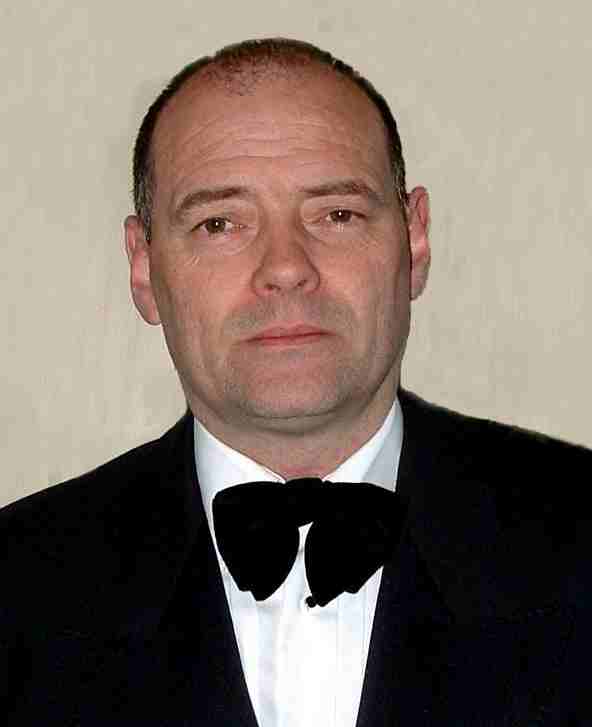
Ian Flemming
|
|||
|
HOME | BIOLOGY | FILMS | GEOGRAPHY | HISTORY | INDEX | INVESTORS | MUSIC | NEWS | SOLAR BOATS | SPORT |
|||
|
BACKGROUND
Ian Fleming was born in 1908 as the son of Valentine Fleming, and the grandson of the wealthy Scottish banker Robert Fleming, Ian Lancaster Fleming grew up the member of a rare class of Englishmen for whom all options are open. The privilege of class and respect came not merely from his grandfather's money, as wealth alone in England does not guarantee open doors. The Fleming family earned their social stripes with service and blood. Ian's father was a service-oriented land-owner in Oxfordshire and a member of Parliament. When Valentine Fleming died in the Great War, Ian was 8 days shy of his 9th birthday. Winston Churchill wrote the obituary for the Times
Ian Fleming
Evelyn St. Croix Rose Fleming, Ian's mother, inherited Valentine's large estate in trust, making her a very wealthy woman. The terms of the trust cut her out should she ever re-marry, which provision was designed to ensure that she would remain Valentine's widow. These financial constraints set the stage for the financial pressures which would haunt Ian Fleming's life. Fleming had to live with the ghost of his father and also competition from his brother Peter, who after his father's passing filled the role of patriarch of the family.
Ian won athletic prizes 2 years' running at Eton but left before graduation over an incident involving a girl, much as his Bond hero would have done. It was an unfortunate end to his Eton years, but at Eton he was always just Peter's younger brother and Valentine's son.
Fleming left Sandhurst without taking an officer's commission. He mentioned in later years that he felt the continued mechanization of the army made the idea of a military career unappealing. A mechanized army, though, is an army without heroes, or personality. And Fleming's streak of independence and apparent need to make his own identity did not fit well with conventional military conduct. Officially, though, Fleming left after being caught out after curfew.
Fleming subsequently went to Europe to continue his schooling. He found a home in the small Austrian town of Kitzbuhel where his education changed consideraly. He likened to an environment totally unlike the conventional campuses of Eton and Sandhurst. His tutors were Forbes and Phyllis Dennis. At Kitzbuhel no other students knew of the war hero Valentine Fleming, not his academic brother Peter. The students only knew Ian for his wit, his good looks and cultured Etonian lack of shyness with women.
However, Ian's late father's fortune and his lack of access to it was sure to make him feel his inheritance had passed him by. The Fleming fortune and high achievements of other members of the family would place a chip on Ian's shoulder. As Ian failed to live up to their expectations, this may have given him the impetus to carve his own niche, and be lauded for his own success. CareerEventually, Fleming set his sights on the foreign service exam, but to his grave disappointment did not make the grade. Nonetheless, Fleming had set a course for himself and worked hard to achieve his own goals. After the failure to join the Foreign Service, Fleming turned to his brother's profession. Following in his Peter's footsteps, Fleming became a journalist, joining Reuters. Fleming's greatest success in his brief Reuters career was the reporting he did on a spy trial in Russia. Which impressed his fellow journalists. Ultimately, though, Ian was the "other Fleming" journalist, as his brother Peter hopped the globe writing colorful news from many distant and exotic locations. Beyond the family implications, Fleming also discovered just how little money journalists made. As the family fortune was bound to evade him, he made the decision to leave journalism. Fleming used the family name to join a London banking firm which he hoped would make him rich. Banking never earned Fleming the fortune he sought, but it gave him independence. He took up residence in Belgravia at 22B Ebury Street. By 1939, it appears Fleming had become bored with the plodding day-to-day existence of a banker. The ups and downs of the stock market apparently did not provide enough intrigue for him. During his Reuters days, Fleming had made friends in the Foreign Office, and maintained them even as a banker. In 1939, Fleming oddly took on an assignment for the Times to return to the Soviet Union to report on a trade mission. It appears that Fleming, in fact, was all the time spying for the Foreign Office. IntelligenceIn May of 1939, Fleming started a more formal attachment to the intelligence service, working with Naval Intelligence. Soon, he was full-time assistant to the director, taking the rank of Lieutenant, and later Commander. Fleming became the right-hand man to one of Britain's top spymasters, Admiral John Godfrey. The war was good to Fleming, forcing him to work within discipline. Fleming schemed, plotted, and carried out dangerous missions. From the famous Room 39 in the Admiralty building in London's Whitehall, Fleming tossed out a myriad of off-beat ideas on how to confuse, survey, and enrage the Germans. In a 1940 trip into a crumbling France, Fleming supervised the escape from Dieppe, juggling the security needs of his country against the crush of refugees seeking escape from the Nazi machine. With Fleming flair, he spent one of his last evening eating and drinking some of the best food in the country, and one of his last days coordinating the evacuation of King Zog of Albania. The "Fleming flair" proved to be his greatest strength in Naval Intelligence. He dined at Scott's, White's, the Dorchester, plotted intelligence operations, many of which were absurd, and many of which proved ingenious. Yet, Fleming understood the business side of the war. He understood his practical job, and the tight constraints of man-power, money and supplies. He did not take his assignments lightly, always gravely aware of the real human risks involved. The "Fleming flair" also proved valuable in one other aspect: writing. As assistant to Admiral Godfrey, Fleming wrote countless memos and reports. His style and elegant arguments, plus his seemingly limitless knowledge of his subjects made the usual dry missives a pleasure to read. Eventually, Fleming wrote memos to William "Wild Bill" Donovan on how to set up the OSS, forerunner to the CIA. For that bit of work, Fleming received a revolver engraved with the message: "For Special Services." Deeper in the war, Fleming took charge of 30 Assault Unit, a group of specially trained commandos who were sent on specific intelligence missions. These missions often meant work behind the lines making sure the Germans did not have a chance to destroy their valuable files. The 30 AU proved to be a great success. Fleming packed them off on missions while he remained mostly desk-bound in London. Nonetheless, 30 AU was his group, and their successes were heaped on his shoulders. During the last year of the war, Fleming traveled to Jamaica for a Naval conference. The trip, though brief, revealed the lush island to Fleming. Here there was no war, no rationing, no food shortages. Fruit lay rotting on the trees and fine rum flowed from the plantations. Fleming immediately began planning for his escape to paradise. A House in JamaicaEvery person plans to run off to some tropical isle, but few do. Real life, family, work, and monetary limitations get in the way. Ian Fleming let none of these considerations stop him. When his war was over, he would, with certainty, return to Jamaica, and not just as a tourist. Fleming set to work. He purchased land and designed a house called Goldeneye. After the war, Fleming set down his schedule. The first week of January saw him leave England and travel to Jamaica. The first week of March saw his return. He accepted his job at Kemsley newspapers without compromise -- this portion of the year would be set aside for Jamaica or he would look elsewhere for employment. For 6 years Fleming traveled each winter to Jamaica, lounging in paradise, romancing women, chasing the sunset, but it was not until he faced the pressure of a married woman who was pregnant with his child did Fleming start the writer's journey which would change his life and popular culture forever. The married woman, Lady Anne Rothermere, had for years been having an affair with Ian, and now pregnant, the time had come for Fleming, at almost 44 years of age to act like a grown-up and marry. As Fleming waited in Jamaica for Anne's divorce to become final, he wrote the first draft of Casino Royale. By this time, 1952, Ian Fleming's circle of friends included some of the top literary names in England. Fleming knew Noel Coward, Eric Ambler, Peter Quennell, Patrick Leigh Fermor, and Cyril Connolly, among others. Fleming had the charm and self-confidence to pick his friends, compartmentalize them, and the self-reliance to never depend on them. Over the next 12 years, Ian Fleming transformed his elite existence, his arrogance, his style, and his acid wit into some of the greatest thrillers ever written. Fleming incurred the respect of authors as diverse as Raymond Chandler, Kingsley Amis, and Edith Sitwell. His fans included John, Jackie, and Bobby Kennedy, and his social circle included Prime Minister Anthony Eden, Evelyn Waugh, and Somerset Maugham. Regardless of book sales or family obligations, Fleming managed to live the life he wanted. As the years passed, his passion for golfing increased so he took more time with it. Fleming's full life caught up with him through his heart. It may be that years of drinking and smoking took their toll, or that the butter-rich cooking Fleming loved was the culprit. Or maybe it was just genetics. Whatever the cause, Fleming's health declined in the late 1950s. This plus anxieties in the marriage increased Fleming's depression. With the success of Bond, the world came knocking at Fleming's door, and he had a harder time shutting those out that he did not want in his life. In 1964, Fleming suffered a severe chest cold which, combined with pleurisy, forced a slow recovery. That summer his mother died, leaving behind her small fortune from Valentine Fleming's trust. But by this time, Fleming had already earned his own fortune and ruled his own literary empire. His doctors advised him he was too ill to attend his mother's service, but he went anyway. In August Fleming went to St. Georges to meet with the golf committee. His heart failed him, and the night of August 11, Ian Fleming began to bleed to death from within. At 1 a.m. on August 12, 1964, Ian Fleming died at the age of 56. He was buried at Sevenhampton, near Swindon close to the Welsh border. His wife Anne died in 1981. Fleming's only child, Casper, died from a drug overdose in 1975. Both are buried beside Ian beneath a simple monument in the local stone church. An avid Bond fan, the creator of Solar Navigator, Nelson Kruschandl, allows his imagination free reign when faced with design or other operational problems. The movies have been, and he hopes, will continue to be an inspiration to all.
Nelson Kruschandl - shaken not stirred May 2004
New energy drinks for performers .. Thirst for Life
330ml Earth can - the World in Your Hands
|
|||
|
This
website
is Copyright © 1999 & 2012 Electrick Publications. The bird
The name '1824' is a trade mark of Solar Cola Ltd. All rights reserved. Max Energy Limited is an educational charity. |
|||
|
AUTOMOTIVE | BLUEBIRD | ELECTRIC CARS | ELECTRIC CYCLES | SOLAR CARS |