|
MARINE ART - FIGURE HEADS
|
||||||||||||||||||||||||||||||||||||||||||||
|
RESEARCH FOR OUR SOLAR LADY
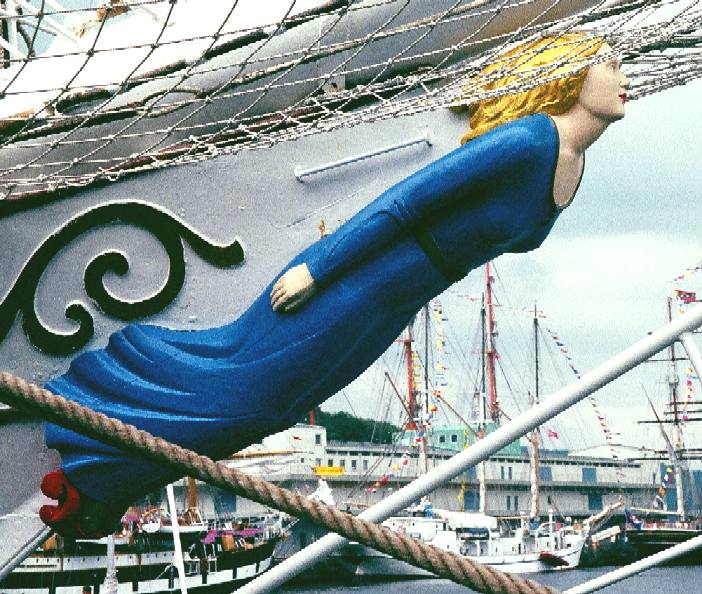
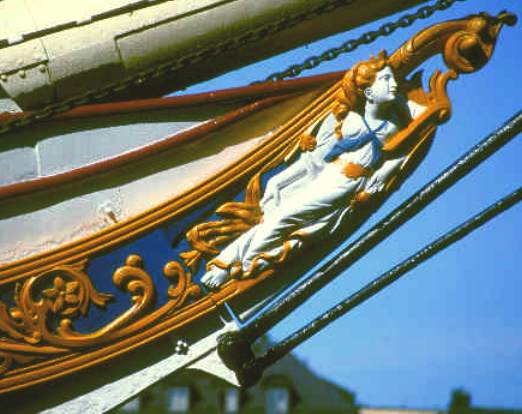
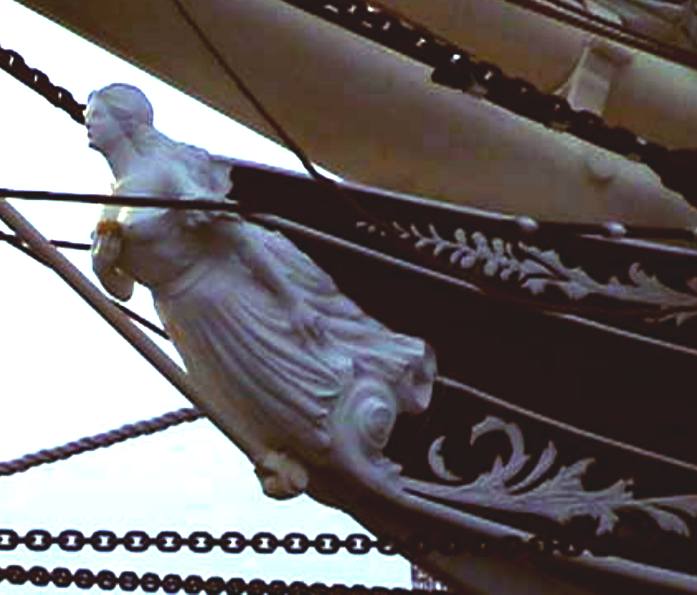
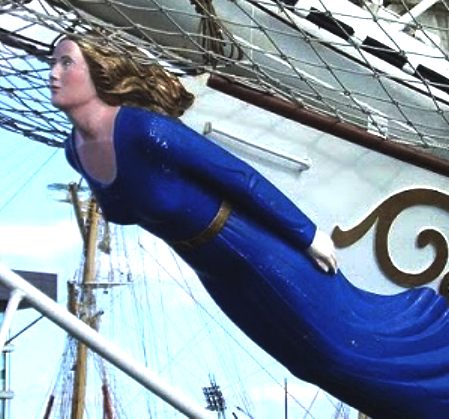
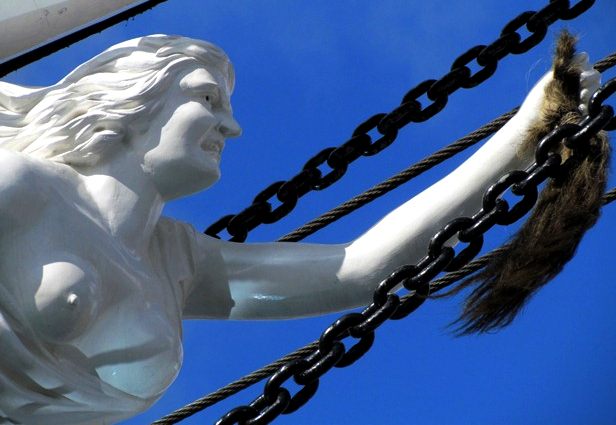
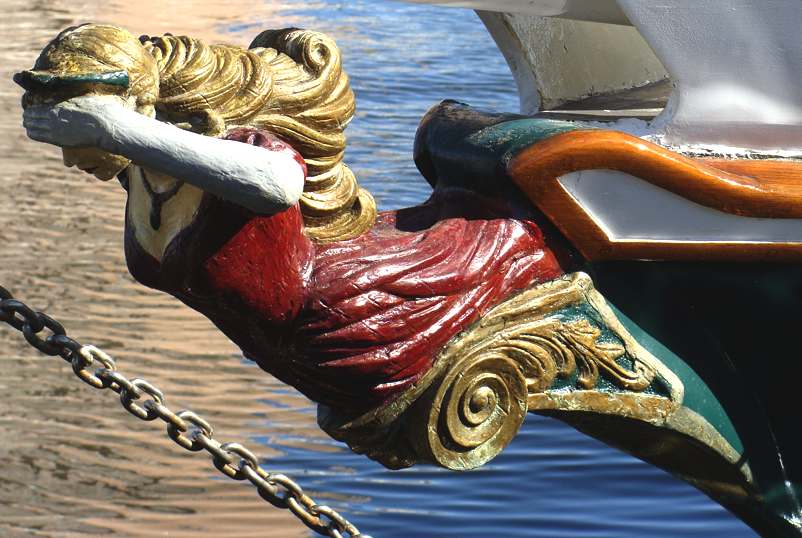
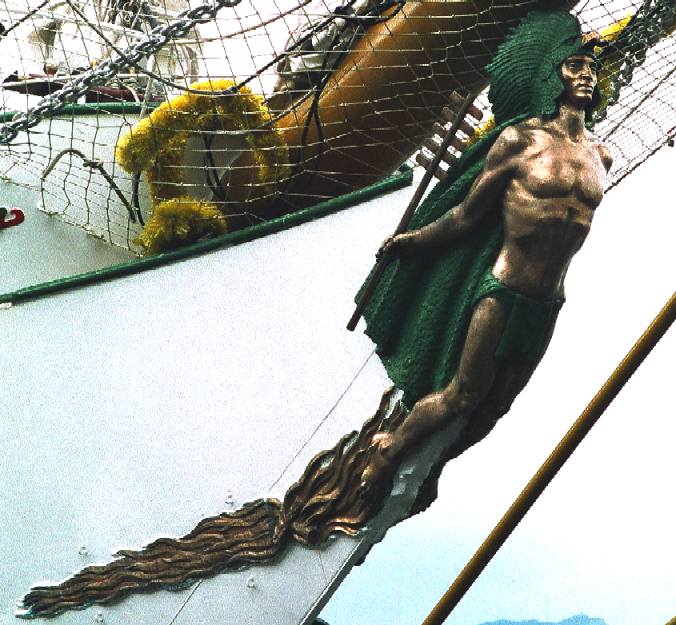
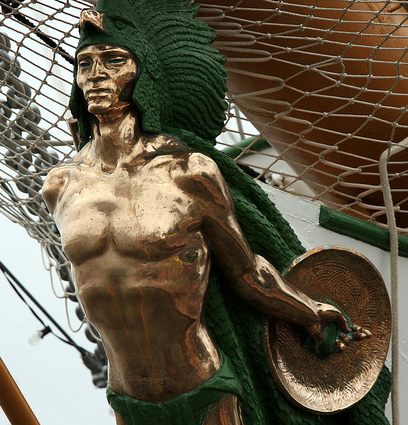
A ship often has an elaborate figure carved from wood - normally a maiden - attached to the bows or prow of the vessel to bring good luck to the ship and its voyages and act as a guiding beacon and inspiration to the crew. A ship is regarded by sailors and marine architects as a female object: "She's a fine ship." "She's a lovely looker." And that may explain to some degree why the female form is preferred to the male. Though in battle one might expect phallic symbolism, where the symbolic version of the phallus (a phallic symbol) is meant to represent male generative powers.
The Significance of the Phallus in marine art is the difference between "being" and "having" the phallus. Men are positioned as men insofar as they have the phallus. Women, not having the phallus, are seen to "be" the phallus. The symbolic phallus is the concept of being the ultimate man, and so armed is compared to having the divine gift of God. Thus, a female form is appropriate as being both the mother and guardian of the ship and the male symbolic regenerative driving force. So much for the theory. A sculptor will tell you the same in a hundred different ways with no Freudian connotations.
Every now and then the artists who carved these works would produced something rather special. It is a shame this particular skill goes largely un-noticed - the exquisite works shown on our pages rarely feature the name or history of the artist. Sculpting to our mind requires extremely creative carving skills and meticulous planning.
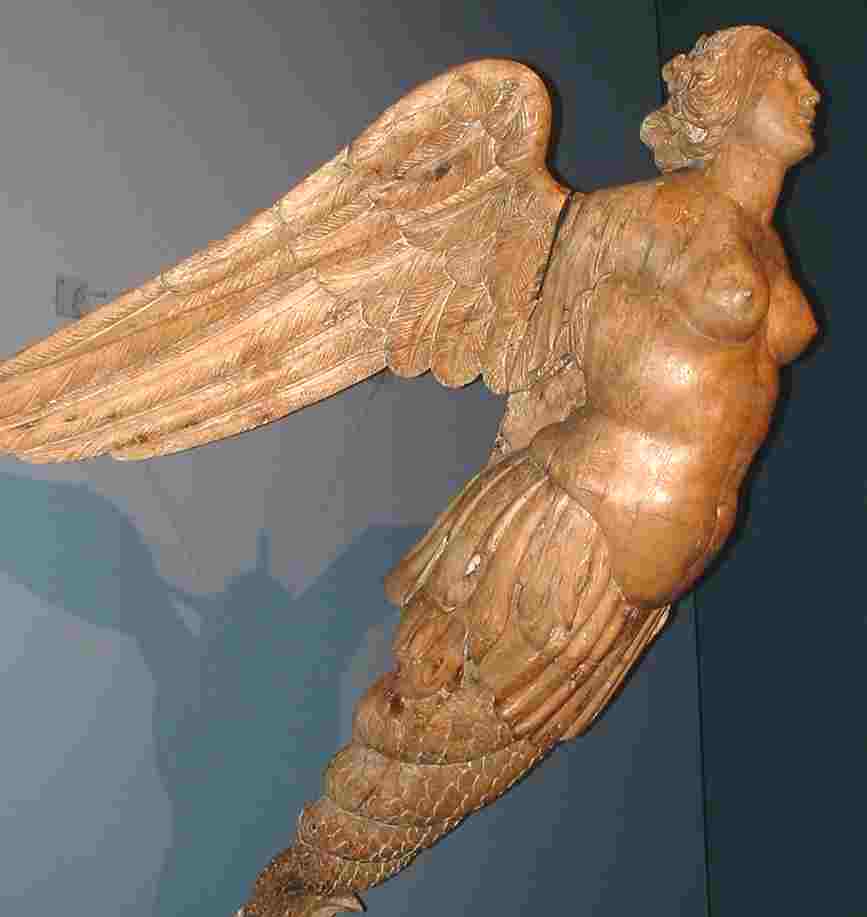
A superb Angel themed figurehead, badly damaged - follow the progress of our figurehead as the Solar Lady develops
Featured on this page is a figurehead carved from an unidentified wood in sections, now preserved for posterity and captured on film by Nelson during his visit to the Maritime Museum in Paris, France 2003.
Much of the message and inspiration for our figurehead was provided by Christina Dusart and Annie Brettell, the aim being for Solar Lady to reflect both the traditional and modern aspects of our stated aims. If you are interested in contributing to this art project please contact the team. In return for your help we will be pleased to feature your work or advertise your exhibition(s).
A figurehead is
usually a carved wooden decoration, most often female or bestial, found at the prow of ships of the 16th to the 19th
century and in ancient times. The practice was introduced with the galleons of the 16th century, as although earlier ships had often had some form of bow ornamentation, the figurehead as such could not come
into being until ships had an actual head structure upon which to place it.
WEATHER
The
weather played an integral role in the fate of ships and sailors in the
days of sail. This was one of the reasons that sea-going vessels often had a figurehead adorning the bow.
Because, it was believed that a ship couldn’t sink so long as the figurehead remained attached. During a fierce storm, if a woman bared her
breasts as one with nature, the storm would abate. This is why
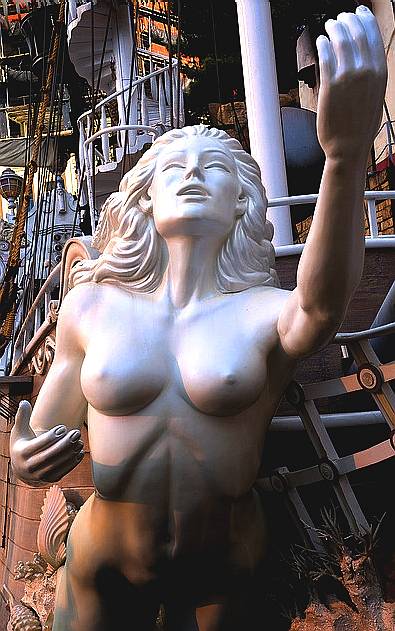
bare-breasted women are often seen as ships’ figureheads.
What could be better as a figurehead than the combination of a beautiful woman with a tail like a fish - a woman of the ocean; combining the best of both worlds, where the mermaid is also bare-breasted.
In 1608 Henry Hudson recorded that two of his men – Thomas Hilles and Robert Rayner – sighted one of these seductive sea creatures:
LINKS
Richard
Hunter Telephone/Fax: 0044 (0) 114 287 3465
J.P.
URANKER WOODCARVER
http://www.maritimawoodcarving.co.uk/
MARITIMA
http://www.hartmann-designs.de/
Claus & Birgit Hartmann Harriersand 6 28 790 Schwanewede Germany Tel :+49 (0) 4296/ 573 Fax:+49 (0) 4296/ 74 81 79
http://www.cindyvallar.com/superstitions.html http://www.cityofart.net/bship/figurehead.htm http://www.telegraph.co.uk/expat/expatpicturegalleries/7299378/Ship-figureheads.html
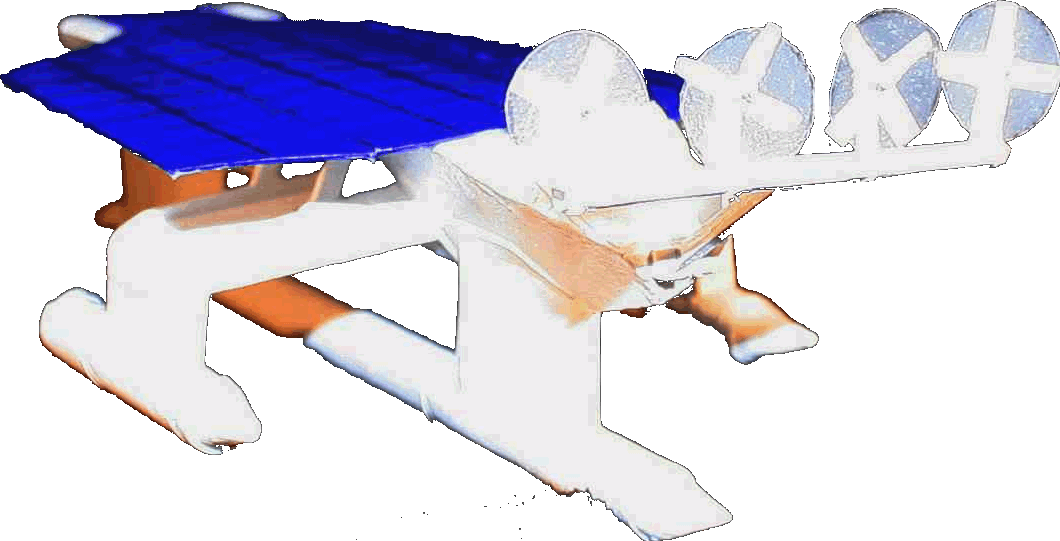
The Solar Navigator - SWASSH (Small Waterplane Area Stabilized Single Hull) test model 2012 The latest Solarnavigator is a robot ship designed to be capable of an autonomous world navigation set for an attempt in 2015 if all goes according to schedule. The platform is also ideal for persistent monitoring 365 days year 24/7 - with data streamed back to your command HQ via satellite.
|
||||||||||||||||||||||||||||||||||||||||||||
|
This
website is copyright © 1991- 2013 Electrick Publications. All rights
reserved. The bird logo
|
||||||||||||||||||||||||||||||||||||||||||||