|
CANCER RESEARCH
|
|
|
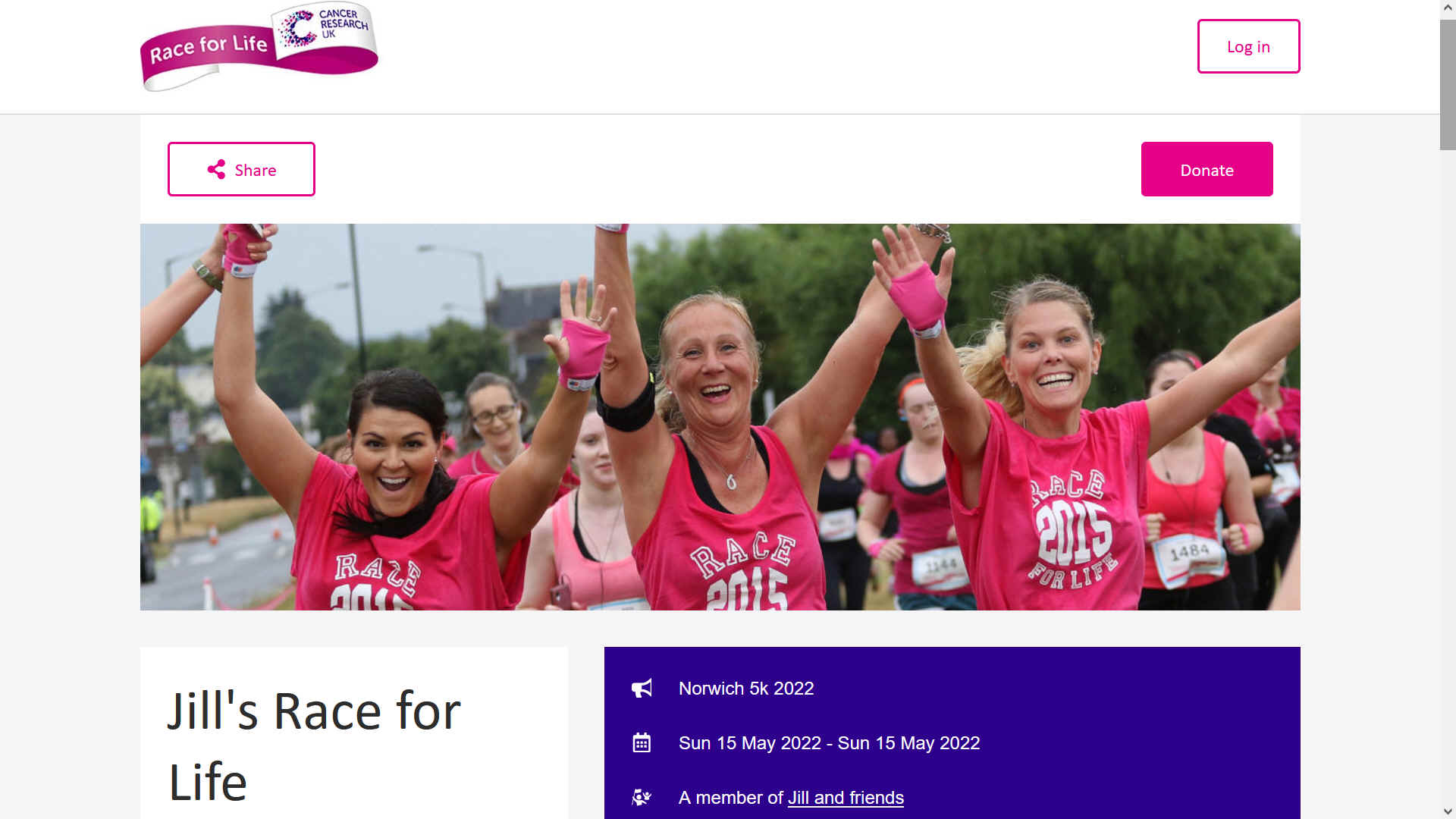
Jill Finn's race for life in support of Cancer Research UK, took place on the 15th of May 2022, with support from her friends. Jill owns a property in Lime Park, Herstmonceux, with Nigel Flood. It is understood that the lady lost two sisters to cancer, prompting her action. Clare Askaroff, another resident in Lime Park, passed away after a long battle with the disease. Charles de Roemer, owner of the whole estate at one point, was also consumed by the disorder. Confirmation, as if more proof was needed, that additional research is needed into cures and prevention.
We live in a society surrounded by man made toxins from diesel particulates to ocean plastics that fish are ingesting poisoning our food supply and threatening our security. Most of these carcinogens come from petroleum distillates, internal combustion engines from cars, buses and trucks and chemicals used in agriculture and manufacturing.
The burning of fossil fuels is warming the planet causing catastrophic climate change that gives as acid rains that wash into our oceans, again attributed to sulfur in vehicle exhaust fumes, to include cargo ships and cruise liners.
Basically, we are killing ourselves, or rather allowing politicians like the big G20 players to kill us, even though they are supposed to be looking out for us. The sad truth is they are more concerned with getting elected with inflated promises, and making money from their positions of trust once elected, than looking after the citizens of planet earth. Corruption in Politics is another form of cancer in society, that must be tackled to save lives, and the lives of thousands of species that we are making extinct.
Be in no doubt that they will continue to murder our children unless you/we put a stop to it. Apathy is the recipe for cancer in society. It's hardly surprising that we have school strikes on Fridays as inspired by Greta Thunberg sitting outside the Swedish Parliament with her placards saying Skolstrejk For Klimatet. We need to flush out our wounds and begin the healing process.
OECD
STUDY ESTIMATES HEALTH IMPACTS OF AIR POLLUTION - 22 May 2014
Some
main recommendations include:
PROACTIVE RESEARCH = FUNDING DISRUPTIVE INNOVATION
There can be nothing quite so traumatic as knowing you are being eaten away from the inside, without any hope of cure from modern medicine. Yet, through dedication and determination scientists are learning more and more about disease and how to fight back. We believe that if a cure cannot be offered, then the quality of life should be enhanced to enable sufferers to enjoy their remaining time in society. We also believe funding is vital for all forms of research which ultimately benefits mankind.
Just as with medical research to find a cure for cancer, we here at Max Energy are aiming to combat harmful airborne pollutants known to be carcinogenic. We are lobbying politicians around the globe for changes to protect and enhance our natural environment - to restore the balance that man's lust for profit is steering us (the human race) to a sticky end. In particular we favour a switch to clean energy for transport. One possible solution to marine pollution is a clean electric vessel, which is kind to marine life and humans.
"We should be working together for a cleaner world"
CANCER RESEARCH UK
Cancer Research UK was established "to protect and promote the health of the public. This country needs a similar establishment to research the nature, causes, diagnosis, prevention, treatment and cure of all forms of disease, waste, pollution, etc.
Cancer is a major public health problem in the UK with over 250,000 people developing cancer each year and over 150,000 dying of the disease.
The vision of Cancer Research is to conquer social cancers, aiming to control the disease that infects 4 out of every five persons in the United Kingdom.
Cancer Research UK will work alone and in partnership with others to achieve the following objectives:
1) To carry out world-class research into the biology and causes of cancer
Cancer is a highly complex disease that is still only partly understood. Only through a better understanding of the disease will the improved treatments, diagnostics and prevention strategies of the future be developed.
2) To develop effective treatments and improve the quality of life for cancer patients
Research will be carried out to accelerate cancer cure rates, aiming to translate our understanding of the disease into effective treatments. Research will also be directed at improving diagnosis of cancer, and at prolonging the life and improving the quality of life of those patients whose disease cannot be cured.
3) To reduce the number of people getting cancer
Research will be carried out into the influence of lifestyle, individual risk, environment and interventions such as vaccination on cancer, and into how people can change their behaviours to reduce their risk of the disease. We will make the wider public aware of cancer risk factors and the options available to them to reduce that risk.
4) To provide authoritative information on cancer
As a leading international research organisation Cancer Research UK will provide authoritative cancer information to the public and promote the best treatments and prevention strategies to governments, commercial organisations, those responsible for cancer care, and the media.
We aim to make the public aware of the social cancer prevalent in local authority, by freely distributing caselaw and documented examples of heavy handed local authority, unreasonableness and breaches of the public's basic civil rights.
Support cancer research - find out how to get involved or donate now. Visit the Science and Research site. Access patient information on our CancerHelp UK site. Direct Debit Donate £2 a month and help more people survive cancer. Race for Life 5km races for women – enter online today!
Sponsored bike rides Get on your bike for a fun day out with friends and family! A gift in your will can make a real difference for the future
LINKS TO CANCER RESEARCH:
Population & Behavioural Sciences Awards Training and Career Development Board Clinical Trials Advisory & Awards Committee Population and Behavioural Sciences Committee Training and Career Development Board
Paterson Institute Scientific Report 2002
Important notes about the Register of Charities:
The charity details available on the Register of Charities are updated on a regular basis as the Commission is informed of changes. This may mean that occasional inaccuracies occur. These are corrected as soon as they are noticed. The trustees of a charity have a legal duty to the Commission about any changes to these details and, every year, they are sent a Register Check form, which enables them to check and update key information. If you see something that you think might be incorrect in relation to your charity, please let the Commission know so they are able to correct the Register entry. Contact: 0845 300 0218.
Search for a Charity:
Search
for a charity by its registered number
What information is given on the Register?
The following information is given for every charity on the Register:
Charity Registration Number
In practice every charity registered with the Charity Commission is given a unique registration number. This is the number they must quote when raising funds.
Main/Group Charity Name
This is the charity's legal name as set out in its governing document. It may be better known by a working name. Where the Commission has been informed about the use of that name it will be given, too.
Old Names
These are any previous names by which the charity has been known.
Working Names
These are any working names or acronyms which we have been told the Charity uses.
Charity Correspondent
This shows the latest contact name and address that the Commission was given for the charity.
Telephone Number/Fax Number
These are the latest numbers which the Charity has supplied.
Email Address/Website Address
These are the latest details which the charity has supplied.
Governing Document
This gives details of what the governing document is and when it was established. It does not contain the full text of the governing document. Copies of governing documents can be obtained from our Contact Centre. A charge may be made for copies of governing documents. We are beginning to display complete Governing Documents for charities. If one is available for a particular charity this is stated on its entry
Objects
These describe what the charity has been legally set up to achieve. They do not necessarily describe all of the activities the charity carries out in order to achieve these objects.
Area of benefit
This is the area that the charity can operate in as set out in its governing document.
Area of operation
This mirrors the area of benefit, but in standardised geographical terms, through the use of locality, district, county, continent or country etc. It will also reflect where the charity is currently operating. For example, a charity whose governing document specifies that its objects are to relieve the poor in the whole of England and Wales may in reality restrict its operations to certain inner city areas. The area of operation will reflect where those inner city areas actually are.
Registration History
This gives the date the charity was registered with the Charity Commission. If the charity has been removed from the Register it will also include details of when this happened. When the Register was first computerised in 1991, the many thousands of charities that existed prior to 1960 were given a registration date of 1 January 1961. Most of these entries have now been updated to show the true date but a few still remain.
Funds Transferred To
Where a charity has been wound-up and its funds have been transferred to another charity, the name and registration number of that charity will be given.
Classification
This is a system of classifying charities by reference to their purposes (what), beneficiaries (who) and method of operation (how). The Commission started to collect this information by asking charities to classify themselves during 2000. Charities are asked to check their classification every year. Many charities have not yet specified a classification for themselves.
Mailing and Submissions
Each year since the first statutory form was issued (AR6) all registered charities have been mailed an Annual Return form. The first forms were given a number AR6, AR7 and AR8 but more recently the forms have been named according to the charity's financial year covered by the return, i.e. AR2000 (AR00), AR2001 (AR01), AR2002 (AR02).
Since 2003, we have mailed Annual Returns and Trustee Update Forms to all charities for completion. Charities with either gross income or total expenditure over £10,000 are required by law to complete the Annual Return form and return it to the Commission within 10 months of their financial year end. Charities with gross income or total expenditure over £10,000 must normally also submit a copy of their accounts within 10 months of their financial year end. We ask for this information to be submitted together with the Trustee Update Form.
Charities under the £10,000 income/expenditure threshold are not required to submit their accounts to the Commission but are required to keep their Register details up to date. We ask charities with a gross income and total expenditure of £10,000 or less to complete only Part A of the Annual Return and submit this information with the Trustee Update Form. Further information here.
Incorporation
This indicates whether the trustees of the charity have been incorporated. This is where the Commission has granted a certificate of incorporation to the trustees of a charity who have applied for one. The Commission can do this where they consider it to be in the interests of the charity. An incorporated body of trustees is able to act in their corporate name as a legal person. It does not affect the charity itself.
Subsidiaries/Constituents
Some charities have subsidiaries. These subsidiary charities share the registration number of the main charity. Each is also given a subsidiary number. For example where a charity has 5 subsidiary charities they will be numbered chronologically 1 to 5. A subsidiary has objects that are compatible with those of the main charity but they often have their own governing document. Where a number of charities have been grouped together under the same registration number, the separate charities that make up that group are called constituents. Often constituent charities will have their own governing documents.
Trustees
The people responsible under the charity's governing document for controlling the management and administration of the charity.
NOTE: The names of trustees shown for a charity are taken either from trustee detail update forms returned to the Commission by the charity or since December 2004 from the declaration form supplied with an application for registration. There can be a delay of 4 - 6 weeks between receiving the information and it appearing on the Register. Trustee detail update forms are issued once each year and the details entered onto our database. At present we do not routinely update these details other than through the update form process.
It is the charity’s responsibility to ensure that they submit accurate information. However, we recognise that the list displayed may include duplicate names. This may be because trustees have the same full name or it may be the result of different versions of the trustees’ name being submitted in the past. The Commission has an ongoing policy of "data cleansing" and is endeavouring to keep duplications to a minimum.
Dispensation
The names of trustees and the principal address of a charity are required to be included in the Annual Report of every charity. However, in some cases disclosing the name of a trustee may place that person at risk. Where there is a risk of personal danger, the Commission will grant a dispensation to that person so that their name can be removed from the Annual Report. The dispensation also covers the disclosure of that name on the Register of Charities. For similar reasons the principal address of a charity may be withheld, although a contact address is always made available. Telephone our Contact Centre (0845 300 0218) for information about how to apply for a dispensation.
Please note: Neither Max Energy Limited nor the Solar Navigator project is in any way connected with Cancer research. If you are considering purchasing any product or service from this website, be advised that your contribution will not be going to Cancer Research unless specifically stated. Please use the links on this page to contact Cancer Research directly.
We aim to provide balanced unbiased reporting on sailing events and renewable energy usage in the modern world. If you have a story you would like us to cover, please use the contact given at the foot of this page. We are not responsible for the content of third party websites.
Events designed to promote electric vehicles and the all important infrastructure to support long distance transport. the aim being to clean up the air we breathe - and in so doing prevent the carcinogenic soup of chemicals entering our bodies.
|
|
|
This website is copyright © 2022 Electrick Publications. All rights reserved. The bird logo and names Solar Navigator and Blueplanet Ecostar are trademarks ™. The Blueplanet vehicle configuration is registered ®. All other trademarks hereby acknowledged and please note that this project should not be confused with the Australian: 'World Solar Challenge'™which is a superb road vehicle endurance race from Darwin to Adelaide. Max Energy Limited is an educational charity working hard to promote world peace.
|